Why Do I Sneeze When I Look at the Sun? Meet the Photic Sneeze Reflex
Sneezing when you step into sunlight is called the photic sneeze reflex, an inherited trait. Bright light seems to switch on the sneeze circuit too, and estimates of how many people have it vary widely.
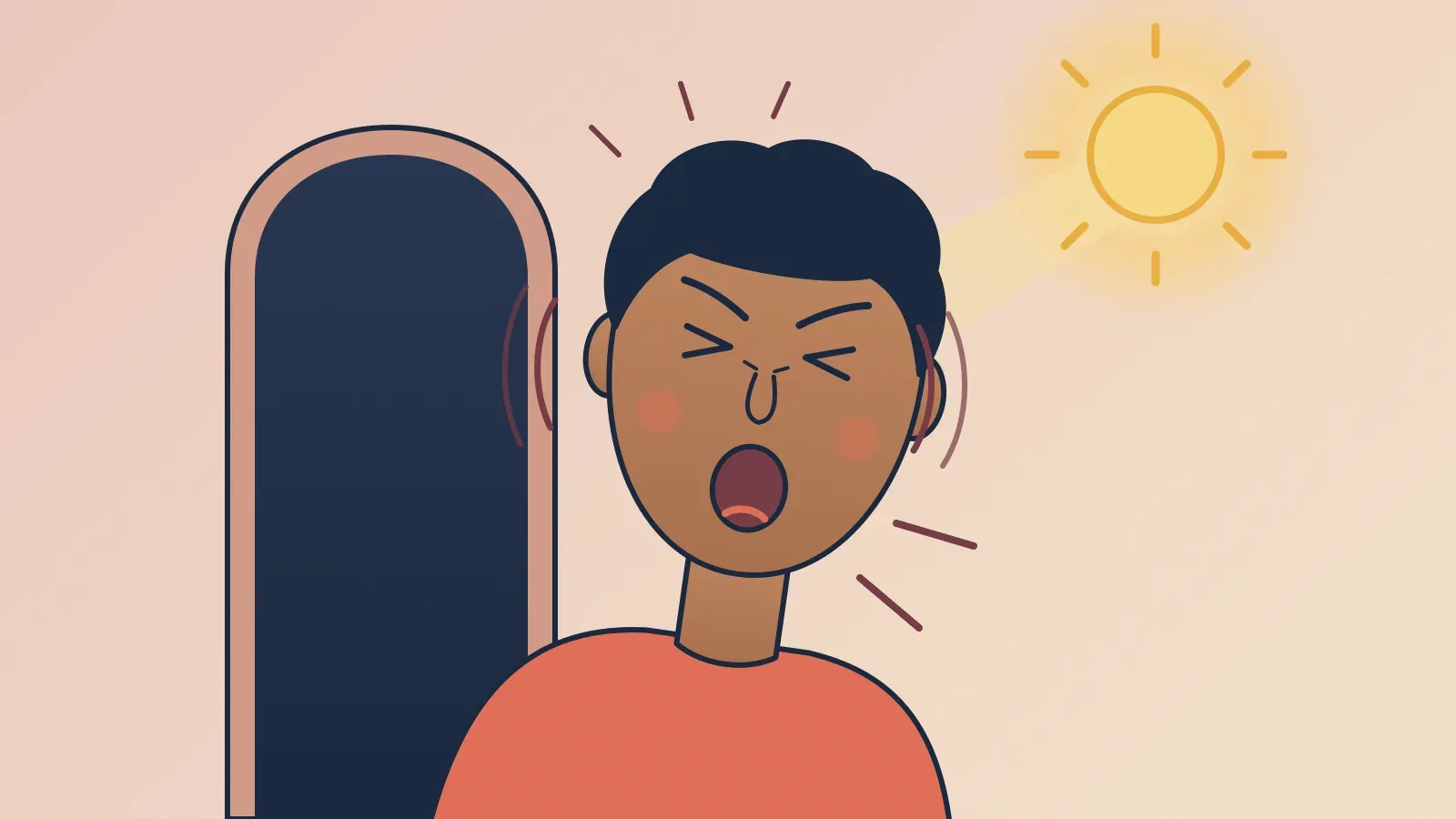
You sneeze when you look at the sun because of the photic sneeze reflex, an inherited trait. In people who have it, bright light reaching the eyes seems to switch on the sneeze circuit as well, possibly through crossed signals in the brain. Estimates vary, but somewhere between 18% and 35% of people may have the reflex.
How many people sneeze in bright sunlight?
There is no exact figure, and sources disagree. Cleveland Clinic puts it at 18% to 35% of people and acknowledges that robust studies are scarce. A 2010 study in the journal PLoS ONE and the Ask a Geneticist service of The Tech Interactive, a science museum in California, use a rounder number: about one in four people.
Part of the gap may come from how it is counted. The reflex is not always strong: some people only sneeze now and then, and for others it is just a prickling in the nose that never becomes a sneeze. An older study cited by Cleveland Clinic also found it more often in white people, especially women.
What is the sun sneeze reflex called?
Its scientific name is the photic sneeze reflex. It also has a playful nickname that mimics the sound of a sneeze: ACHOO syndrome, short for Autosomal Dominant Compelling Helio-Ophthalmic Outburst. In plain English, a sneeze set off by sunlight in the eyes and passed down as a dominant trait.
People have noticed it for a very long time. Aristotle discussed it in one of his collections of problems, in the section about the nose. The classic trigger is a sudden shift from dark to bright, such as walking out of the house on a sunny day or driving out of a tunnel. Camera flashes and bright indoor lights can set it off too, usually producing one sneeze or a few in a row.
Why does sun sneezing run in families?
Family studies show an autosomal dominant pattern of inheritance. In practice, inheriting one copy of the gene variant from one parent is enough to have the reflex, and a child with one parent who has it has about a 50% chance of having it too.
The gene responsible has not been pinned down. In 2010, researchers found the first genetic variant associated with sneezing in bright light, and later work has linked dozens of genetic markers to it. The genetics, in other words, look more complicated than a single gene.
What happens in the brain of a sun sneezer?
Nobody knows for sure, but there are a few hypotheses, and they are not mutually exclusive:
- Crossed signals: bright light triggers the reflex that shrinks the pupil. In photic sneezers, that signal may also reach the sneeze center, as if two neighboring circuits bumped into each other.
- Nearby nerves: the circuits serving the eyes and the nose run close to each other. That could also explain why some people sneeze at cold air or strong flavors such as mint.
- A more light-sensitive brain: in the 2010 study, Nicolas Langer and colleagues recorded brain activity in people with and without the reflex while they looked at flashing lights. In sneezers, the visual cortex responded more strongly, and the prickling in the nose was linked to activity in areas that process body sensations.
According to those authors, the reflex does not rely only on brainstem circuits but also involves regions of the cortex. Much like hiccups, another reflex we cannot control, the exact mechanism is still an open question, on a list of bodily puzzles that also includes the competing explanations for yawning.
Is sneezing at the sun dangerous?
The sneeze itself is harmless. The risk lies in when it happens. Cleveland Clinic points out that a sneezing fit while driving or operating machinery can be dangerous, and it mentions the case of a 26-year-old involved in three car crashes linked to sun-triggered sneezing. It is also worth telling your dentist or eye doctor before procedures that use bright light.
There is no specific treatment, but sunglasses and a hat can soften the jump from dark to bright. Cleveland Clinic adds that keeping hay fever and other nasal inflammation under control may also cut down on sneezing in general. And you never need to stare at the Sun, which is unsafe, to set off the reflex: ordinary daylight is enough. For people who have it, every walk into a sunny day comes with a small reminder from some ancestor who sneezed at the sun too.