What Causes Brain Freeze, and How Do You Make It Stop?
That stab in the forehead after a spoonful of ice cream starts with cold on the roof of the mouth, which affects blood vessels and triggers the trigeminal nerve. It passes quickly, and warming the palate helps.
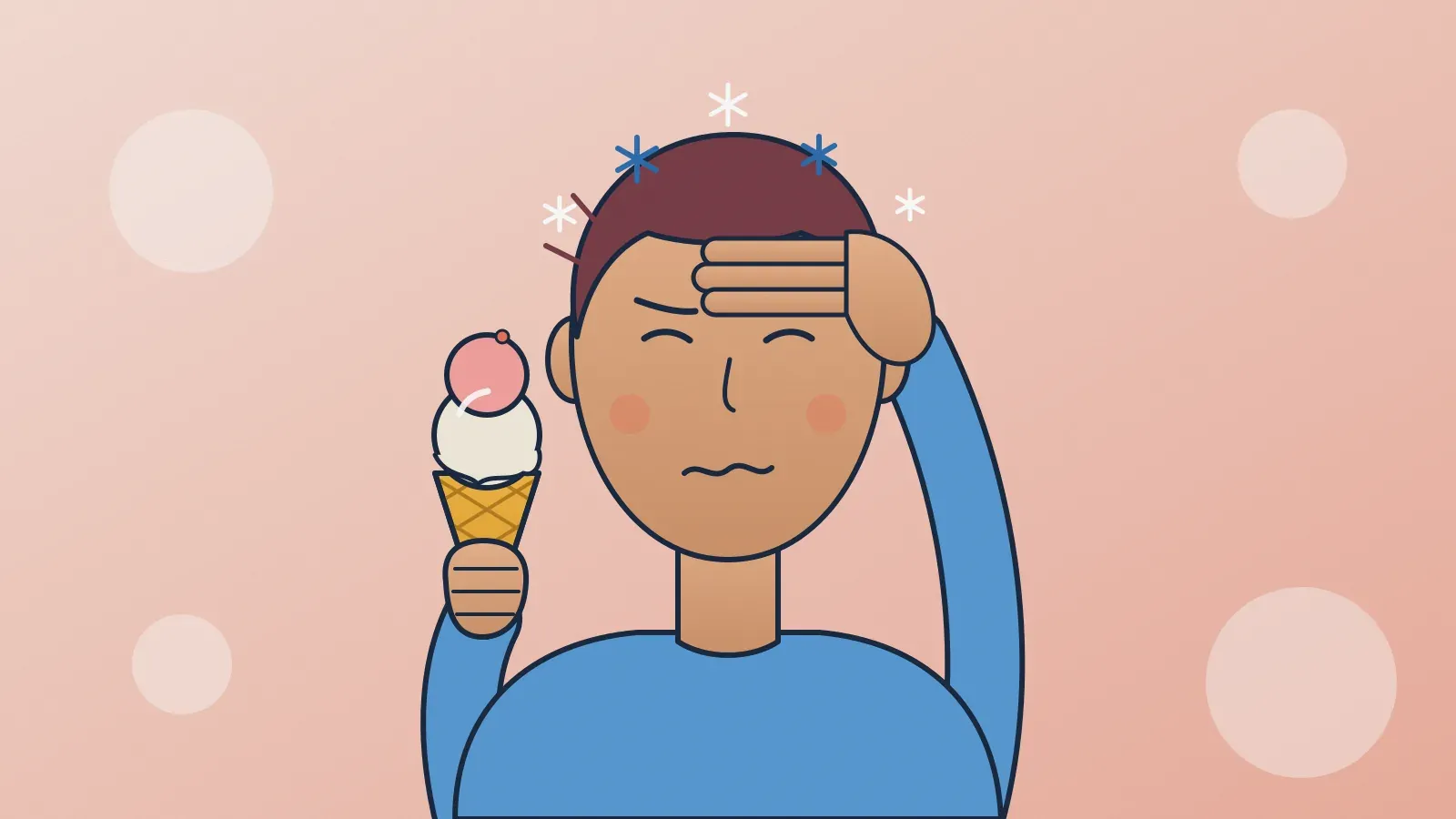
Brain freeze happens when something very cold touches the roof of your mouth. The sudden chill makes the blood vessels there constrict and then quickly widen again. A facial nerve, the trigeminal nerve, picks up that change, and your brain reads the signal as a sharp pain in the forehead or temples.
What is the medical name for brain freeze?
Brain freeze, or ice cream headache, is the everyday name for this short, sharp pain. In medical writing it is called sphenopalatine ganglioneuralgia, a name that refers to a cluster of nerve cells in the face. The International Classification of Headache Disorders, used by neurologists worldwide, lists it as headache attributed to ingestion or inhalation of a cold stimulus, with ice-cream headache and brain-freeze headache as earlier terms.
Under that classification, it is pain in the forehead or temples, usually on both sides, that starts right after something cold passes over the palate or the back of the throat and fades within 10 minutes once the cold is removed. In practice, it is usually much shorter: in a study of Canadian students, most episodes lasted less than 10 seconds.
What is actually happening in your head?
The roof of your mouth normally sits close to body temperature. When a spoonful of ice cream or a gulp of slushie lands there, the temperature plunges. To hold on to the remaining heat, the blood vessels in the area constrict and then relax, and blood rushes back in.
That change is picked up by the trigeminal nerve, which handles sensation in the face, including pain. The brain does not pinpoint where the signal comes from, so you feel the pain in your forehead and temples instead of your mouth. Doctors call this referred pain.
An experiment presented at the Experimental Biology meeting in 2012 added another piece. Researchers led by Jorge Serrador of Harvard Medical School measured blood flow in the brains of 13 volunteers while they sipped ice water with the straw pressed against the roof of the mouth. The anterior cerebral artery widened quickly as the pain began and narrowed again as it faded. The team suggested this sudden surge in blood flow triggers the pain, but the group was small and the work was a conference abstract, so it remains a hypothesis.
Does eating ice cream slowly prevent brain freeze?
It helps a lot, and it has been tested with real ice cream. In 2002, the BMJ published a trial run at a school in Hamilton, Canada, with 145 students around 12 years old. Some were told to eat their ice cream fast, the others slowly. The result:
- In the fast-eating group, 27% got a headache (20 of 73 students).
- In the slow-eating group, 13% did (9 of 72 students).
Eating fast roughly doubled the odds of pain, but eating slowly did not eliminate it. The authors noted some limits as well: the students knew which group they were in, and the headaches were self-reported.
Why do some people get brain freeze and others don't?
Sensitivity varies. Houston Methodist, a US hospital system, cites estimates that about 40% of people are susceptible. In the Canadian study, though, 79% of students said they had felt it at some point in their lives. The gap shows how much the number depends on who is studied and how the question is asked. The headache classification adds that it is especially common in people with migraine.
Despite the nickname, ice cream, a treat whose history goes back well before refrigerators, is not the only culprit. Iced drinks, shaved ice and even very cold air breathed in through the mouth can set off the same pain.
How do you stop brain freeze fast?
It goes away on its own, and Houston Methodist describes it as harmless. To speed things up, the goal is to warm the roof of your mouth again:
- Take the cold food or drink away from your mouth and pause.
- Press your tongue against the roof of your mouth to warm it.
- Sip some room-temperature or warm water.
- For the next spoonfuls, go slowly and take small bites.
The 2012 researchers speculated that the artery widens to keep the brain warm, an idea that has not been confirmed. Brain temperature control also comes up among the theories for why we yawn. Until science settles it, the most useful advice is the simplest: keep enjoying the ice cream, just don't race through it.
Sources
- Houston Methodist: What Causes Brain Freeze?
- International Headache Society (ICHD-3): 4.5.2 Headache attributed to ingestion or inhalation of a cold stimulus
- BMJ (via PubMed Central): Ice cream evoked headaches (ICE-H) study
- American Physiological Society (EurekAlert!): Changes in brain's blood flow could cause 'brain freeze'