Why Do We Yawn? What Science Knows and What Is Still a Mystery
Yawning is not just about being sleepy or short on oxygen. Here are the main scientific hypotheses, which ones have the most evidence and why yawns spread from person to person.
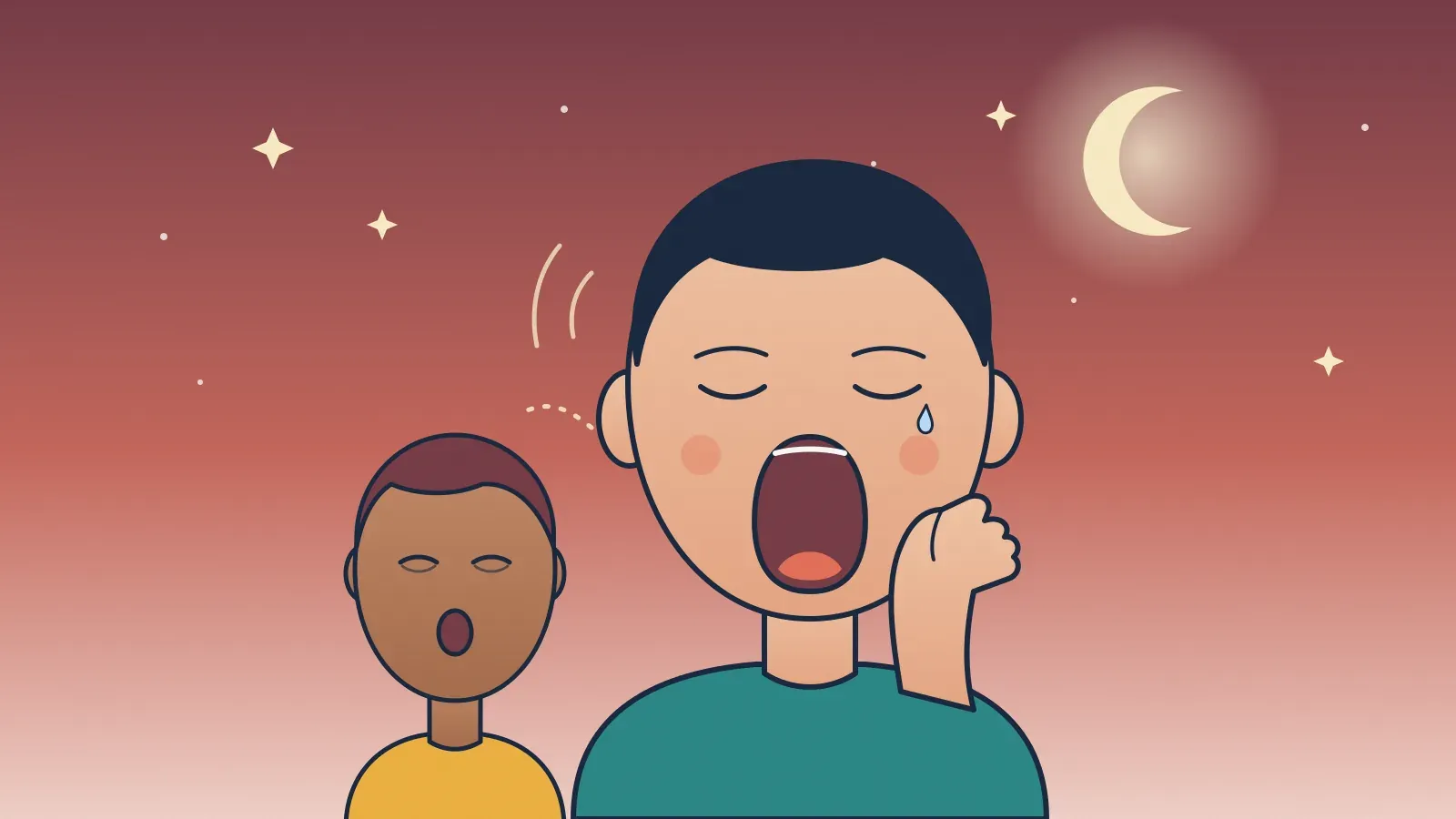
Everyone yawns, and almost no one can explain why. Yawning starts before birth, shows up in many vertebrate animals and is so common it might seem like a solved question. It is not. Science has ruled out some popular explanations, gathered evidence for others and is still debating what the main purpose of this reflex really is.
The oxygen myth
The most repeated explanation is that we yawn to take in more oxygen or get rid of built-up carbon dioxide. It sounds logical, but it has not held up under testing. In experiments published in 1987, psychologist Robert Provine and colleagues had volunteers breathe air with different levels of oxygen and carbon dioxide, and yawning frequency did not change. In the same work, exercise doubled breathing rate without increasing yawning.
In other words, if yawning were meant to fix blood oxygen levels, those tests should have shown an effect. Since they did not, researchers in the field now consider the oxygen hypothesis weak.
The brain cooling hypothesis
The explanation that has gained the most ground in recent decades was put forward mainly by Andrew Gallup and Gordon Gallup Jr. in the United States. The idea is that yawning helps regulate brain temperature. The strong stretch of the jaw would increase blood flow in the head, and the deep breath would bring in cooler air, helping swap warmer blood for cooler blood.
Several findings support this idea:
- In rats, the temperature of the brain's cortex rose before yawns and returned to baseline within a few minutes afterward.
- In a 2007 study, breathing through the nose or holding a cold pack to the forehead reduced how often volunteers caught contagious yawns.
- In 2014, researchers observed pedestrians in Vienna and compared them with a similar study in Arizona: people yawned more at mild temperatures, around 20 °C (68 °F), and less in intense heat or near freezing. The authors call this a thermal window.
Even so, it is worth stressing that direct measurements of human brain temperature during yawning are still missing. The authors themselves describe brain cooling as the explanation most consistent with the available data, not as a proven fact.
Why are yawns contagious?
Seeing, hearing or even reading about someone yawning can set off a yawn. That much is well documented. In a study of 328 volunteers published in 2014 in the journal PLoS ONE, about 68% yawned at least once while watching a three-minute video of people yawning. In humans, contagious yawning usually appears around age 4 or 5, well after spontaneous yawning.
For a long time, catching yawns was said to be a sign of empathy. The evidence for that is mixed. In the 2014 study, age was the only factor that predicted susceptibility, with older people yawning less, while empathy measures made no difference. In a 2017 review, Jorg Massen and Andrew Gallup concluded that the evidence linking contagious yawning and empathy is inconsistent and inconclusive. Social signaling remains a plausible hypothesis, but it has not been confirmed.
Consensus and mystery side by side
| Claim | Current status |
|---|---|
| We yawn because we lack oxygen | Little support: experiments found no effect |
| Yawning helps cool the brain | Hypothesis with supporting evidence, no direct proof in humans yet |
| Yawning is contagious | Well documented |
| Contagious yawning measures empathy | Inconsistent evidence |
| Yawning begins before birth | Documented in fetuses |
| The main purpose of yawning | Still debated |
The practical takeaway is simple: yawning is normal and does not mean you are short of air. Most likely, yawning has more than one function, with brain temperature regulation among the strongest candidates and social contagion as a real but still poorly explained effect. If you notice you have started yawning far more than usual, with no link to sleepiness or tiredness, it is worth mentioning to a health professional.