Goosebumps: Why Our Skin Prickles in the Cold, in Fear and With Great Music
Tiny muscles attached to each hair contract and raise the skin. It's a legacy from when our ancestors had fur, and the same reflex shows up during strong emotions, such as hearing a moving piece of music.
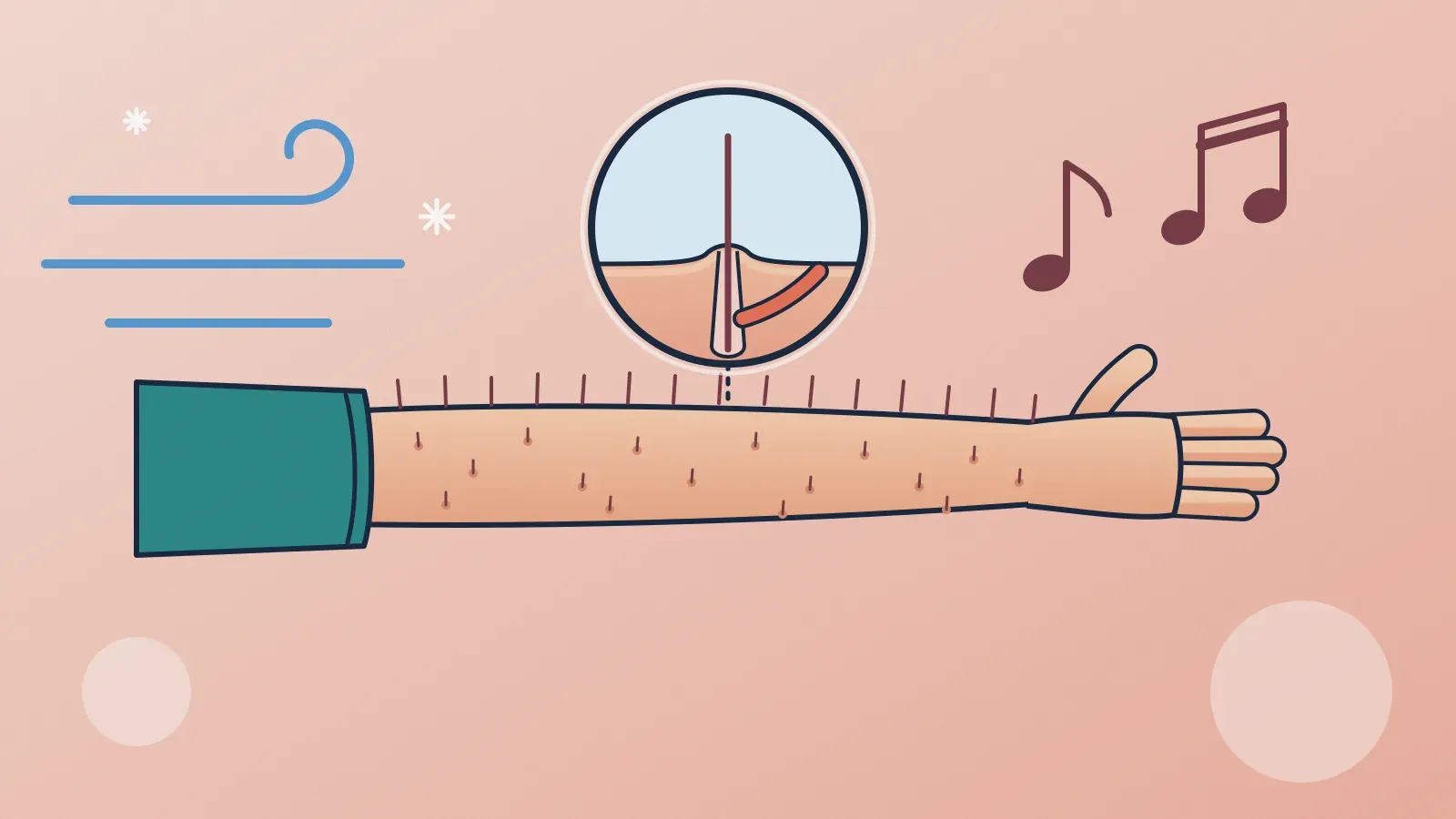
An icy breeze, a strange noise in the dark or the right chorus in a song: very different situations can give you goosebumps. The hairs stand on end and little bumps appear, as if your skin had turned into that of a plucked bird. Behind it lies an ancient reflex that does little for us today but remains closely tied to our emotions.
A tiny muscle for every hair
Every hair follicle has a microscopic muscle attached to it, called the arrector pili. It is controlled by the sympathetic nervous system, the part of the autonomic nervous system that gets the body ready for alert situations. When the nerves release norepinephrine, the muscle contracts, pulls the hair upright and lifts the skin around it. The result is a goosebump, which doctors call piloerection.
A legacy from our furry past
In mammals with thick coats, raising the hair has two clear uses. In the cold, the lifted hairs trap a layer of air that acts as insulation. In the face of a threat, the animal looks bigger, like a dog raising its hackles or a chimpanzee doing the same when afraid or aggressive. Because humans have little body hair, the reflex barely protects us, so it is considered vestigial, an evolutionary leftover.
That doesn't mean the structure is useless. In 2020, the team of researcher Ya-Chieh Hsu at Harvard University showed in the journal Cell, in studies with mice, that the arrector pili muscle and the sympathetic nerves form an environment that regulates hair follicle stem cells and influences hair growth. The idea that cold might, through this route, encourage a thicker coat is still a hypothesis, and the results come from animals, not people.
Cold, fright and emotion
Because the sympathetic system kicks in during many kinds of alert, goosebumps show up in quite different situations:
- Cold: the most basic response, linked to conserving heat.
- Fear or a sudden fright: the same system that speeds up the heart makes the hairs stand up.
- Intense emotions: a film scene, a speech, a memory or an important achievement.
- Music: a kind of chill so widely studied that it has its own name, frisson.
Frisson: chills from music
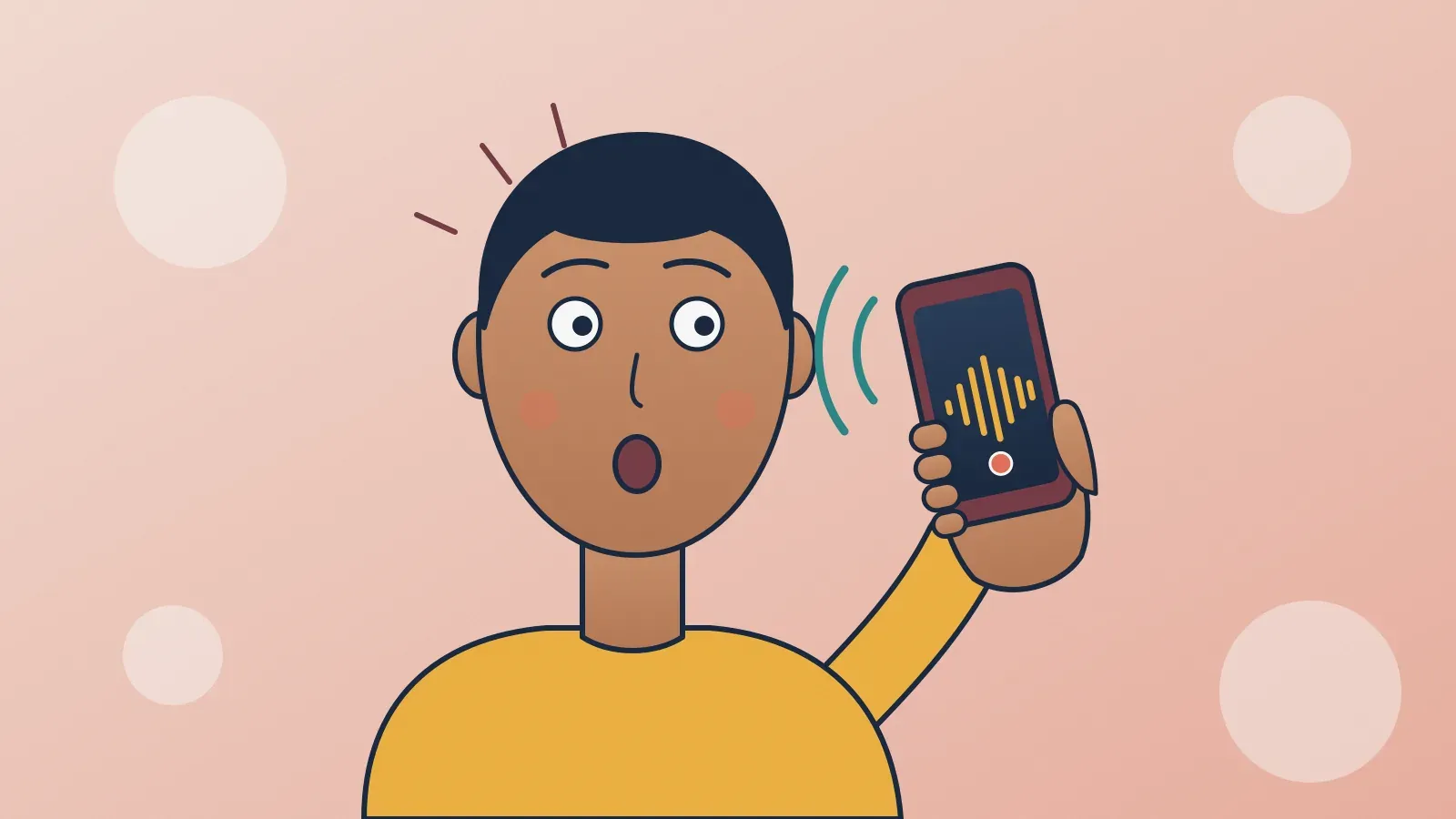
Many people feel a tingle running up the back of the neck and down the spine, often with goosebumps, during certain passages of music. In 2001, Anne Blood and Robert Zatorre, of McGill University in Canada, used positron emission tomography to look at the brains of volunteers listening to music they had chosen themselves. As the chills grew stronger, activity changed in regions linked to reward and emotion, such as the ventral striatum, the amygdala and the orbitofrontal cortex.
In 2011, Valorie Salimpoor and colleagues, also at McGill, showed in Nature Neuroscience that these moments release dopamine, the same chemical associated with other rewards. Interestingly, a region called the caudate nucleus was more active while anticipating the big moment, while the nucleus accumbens responded at the emotional peak. In other words, anticipation is part of the pleasure too.
Why not everyone feels it
Estimates of how many people experience frisson vary widely between studies, from about 55% to 86%. Research has linked it to the personality trait known as openness to experience. A study by Matthew Sachs and colleagues, published in 2016 with only 20 participants, found that people who get chills from music had more white matter connections between auditory regions and areas tied to emotion, such as the insula. Because the sample was small, the result is a lead, not a conclusion.
In short, goosebumps are a reflex inherited from furry ancestors: a tiny muscle lifts each hair when the nervous system goes on alert. For us, it does little against the cold, but it has become a visible sign of emotion. Shivering chills that come with a fever or feeling unwell are a different matter, though, and are worth having checked by a health professional.