Why Your Own Voice Sounds So Strange on a Recording
When we speak, we hear our voice through the air and also through vibrations in the skull, which boost the low tones. A recording captures only the sound that travels through the air, so it seems thinner and higher, and it catches us off guard.
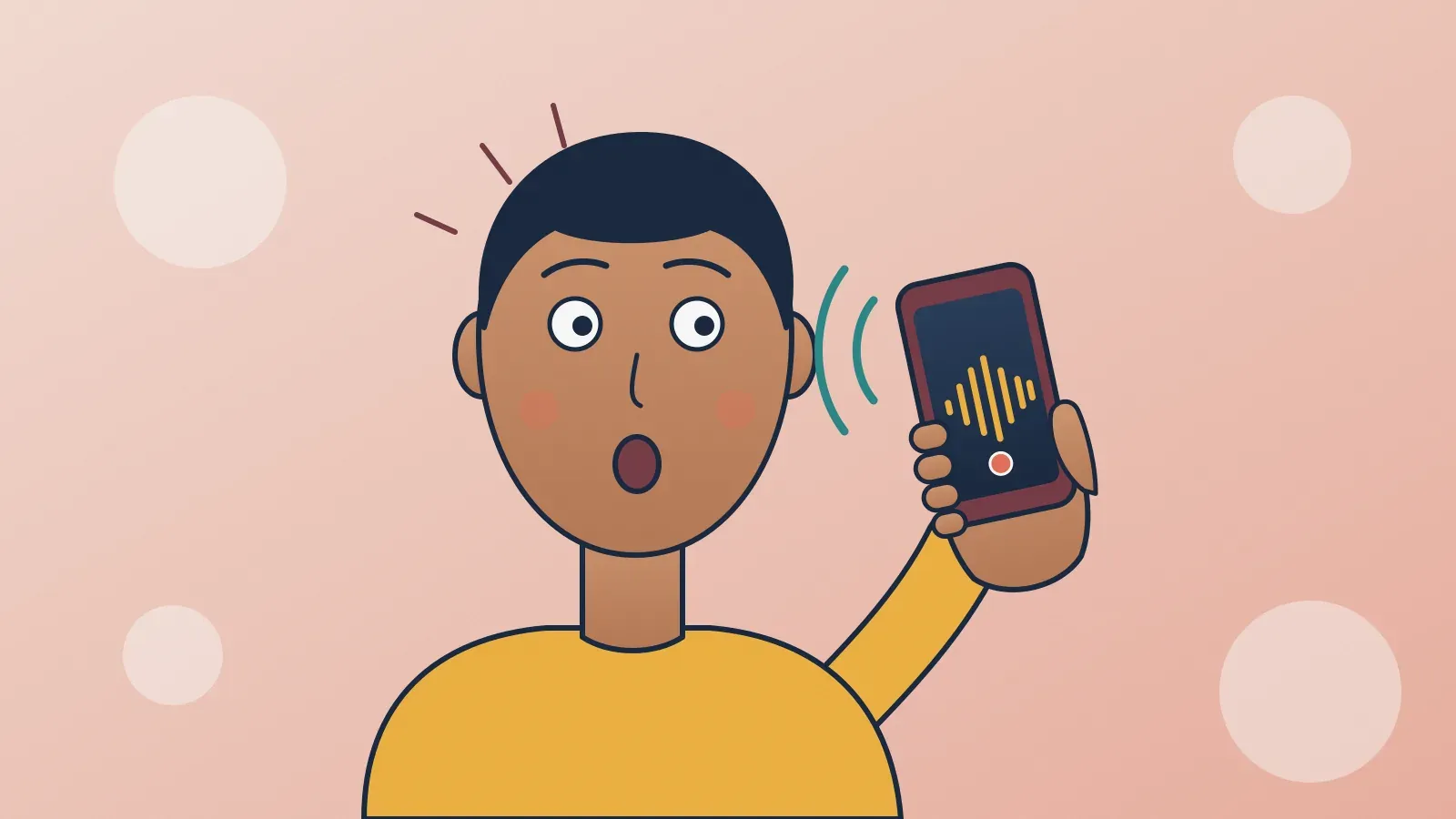
You record a voice message, play it back and think: that can't be me. The reaction is so common that psychology even has a name for it. The good news is that nothing is wrong with the recorder or with you. The difference comes from the path sound takes to reach your ears, and from how used your brain has become to a version of your voice that nobody else hears.
Two routes to the ear
When someone else speaks, the sound travels through the air, enters the ear canal, makes the eardrum vibrate and passes through the tiny bones of the middle ear to the cochlea, where it becomes a nerve signal. That's air conduction. When you speak, however, your vocal folds are inside your own body. Part of the vibration travels through the tissues and bones of the skull and reaches the inner ear directly. That's bone conduction.
| Route | How the sound arrives | Who hears it |
|---|---|---|
| Air conduction | Through the air, via the ear canal, eardrum and middle-ear bones | You, other people and the microphone |
| Bone conduction | Through vibrations in the tissues and bones of the head to the inner ear | Only you, and only for your own voice |
Why the recording sounds higher
Bone conduction boosts low frequencies more than air conduction does. That's why, inside your head, your voice sounds fuller and deeper. A microphone, on the other hand, picks up only the sound that leaves through the air, just like any listener. Without that bass boost, the recording sounds thinner and higher. In practice, this is the voice other people have always heard.
One detail is worth noting: the basic pitch of your voice, the frequency at which your vocal folds vibrate, is the same in both cases. What changes is the balance between low and high tones, in other words the timbre. Small microphones and speakers, like those in many phones, can make the difference more noticeable because they reproduce low sounds poorly.
The psychological discomfort
Physics explains the difference, but not why so many people find it unsettling. In the 1960s, American psychologists Philip Holzman and Clyde Rousey studied what they called voice confrontation. They observed that, on hearing a recording, people tended to focus on negative qualities and reacted defensively. One proposed explanation is that the voice carries emotional cues, such as anxiety or hesitation, that we don't notice while speaking but that become obvious on a recording.
The discomfort is still common. In a survey published in 2023 in the journal The Laryngoscope, a team from Mass Eye and Ear, a Harvard-affiliated hospital, questioned 1,522 adults. About 57.5% said they disliked hearing their recorded voice, while 38.8% were unhappy with how their voice sounded in everyday conversation.
We like our voices more than we think
In 2013, researchers Susan Hughes, of Albright College, and Marissa Harrison, of Penn State, published a curious experiment in the journal Perception. Eighty people rated the attractiveness of recorded voices counting from 1 to 10, and samples of each participant's own voice were slipped in without warning. On average, participants rated their own voice higher than they rated other people's voices, and higher than other raters rated it. According to the authors, most probably did not recognize their own voice. One possible explanation is the mere exposure effect: we tend to prefer what sounds familiar, even without realizing it.
How to get used to your own voice
- Listen to recordings of yourself often: familiarity tends to reduce the strangeness.
- Remember that the recorded version is the one everyone already knows; the surprise is yours alone.
- Use good-quality microphones and headphones when you want a more faithful sense of your voice.
- If you have hoarseness that won't go away, pain or a lasting change in your voice, see an ear, nose and throat doctor or a speech-language therapist.
In short, the voice you hear when you speak is a blend of sound arriving through the air and vibrations traveling through your skull that boost the low tones. A recording reveals only the first part, the same one other people hear. Feeling strange about it is natural, usually fades with practice and doesn't mean your voice is any worse than you imagined.