Why Tickling Works on Us but Never When We Do It Ourselves
Tickling depends on surprise. When we move our own hand, the brain predicts the touch and dampens it, and experiments with robots have shown how that mechanism works.
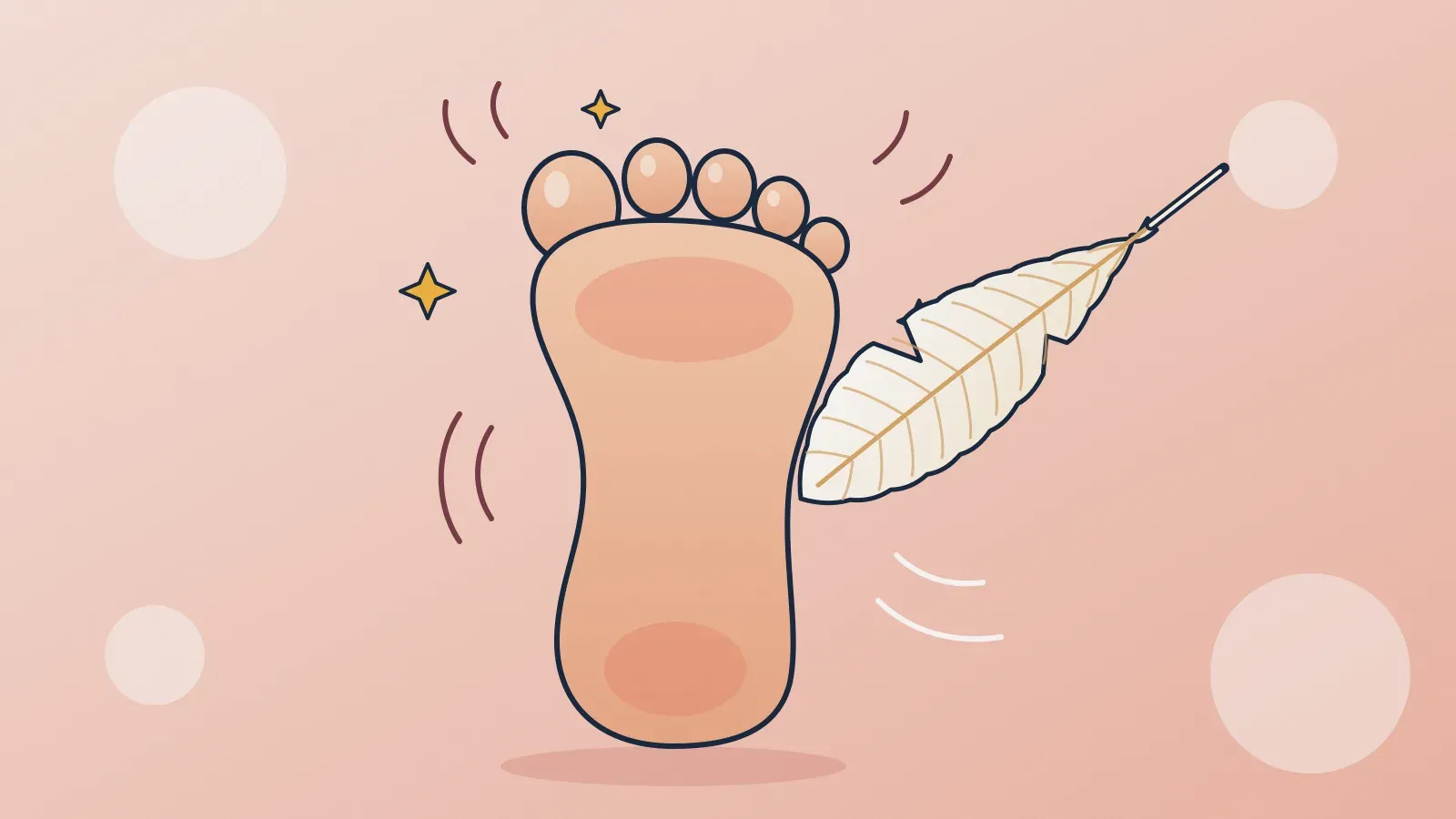
Try tickling the sole of your own foot and almost nothing happens. Let someone else make the exact same movement and you squirm with laughter. The difference is not in the skin, which is the same, but in the brain: it knows what your hand is about to do and gets ready for it. Understanding that trick explains more than tickling. It also shows how we tell apart what we do from what happens to us.
There are two kinds of tickle
In 1897, American psychologists G. Stanley Hall and Arthur Allin proposed splitting tickling into two categories, with Greek-derived names that are still used today. They may seem like the same thing, but they trigger very different reactions.
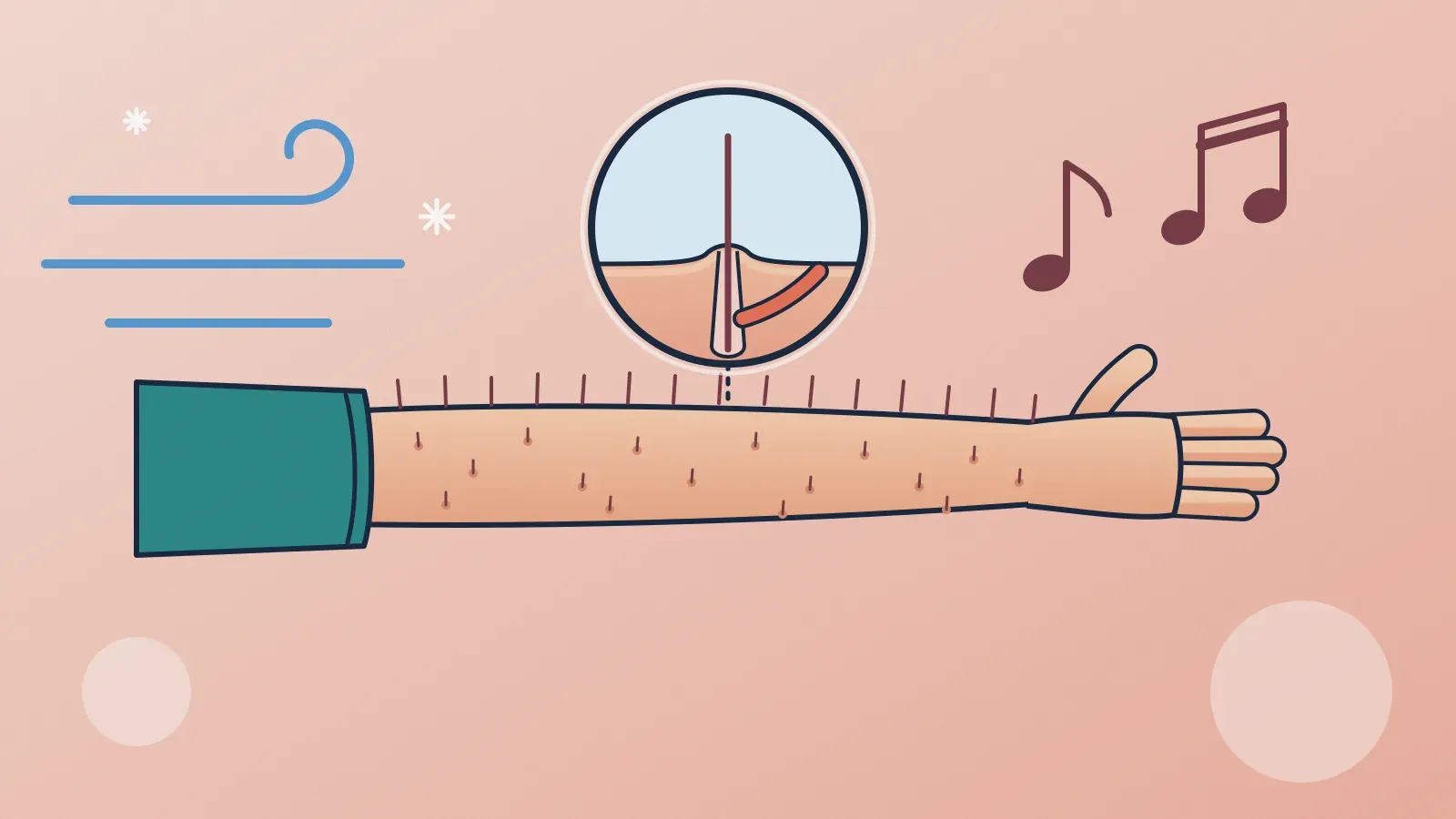
- Knismesis: a light touch, like a feather or an insect crawling on the skin. It causes an itch or a shiver, rarely laughter, and we can produce it on ourselves. Many animals respond to this kind of stimulus.
- Gargalesis: firmer, repeated pressure on sensitive areas such as the ribs, armpits and soles of the feet. This is the one that makes us laugh, and it usually fails when we try it on ourselves. It has been described in humans and other primates.
The brain predicts its own touch
Whenever the brain sends out a movement command, it also generates a prediction of the sensations that movement will cause. Neuroscientists call this an internal model, or forward model. When the real sensation matches the predicted one, it is toned down; when it doesn't, it stands out. That makes sense: the brain doesn't waste effort on what it caused itself and stays alert to what comes from outside.
In 1998, neuroscientist Sarah-Jayne Blakemore and her colleagues Daniel Wolpert and Chris Frith, at University College London, published a functional MRI study in Nature Neuroscience. The somatosensory cortex, which processes touch, and the anterior cingulate cortex, linked to how pleasant a sensation feels, were less active when people touched themselves. The cerebellum, a region that monitors movement, emerged as a key player: it appears to help predict the sensation and cancel the response in those other areas.
The robot experiment
In 1999, in the Journal of Cognitive Neuroscience, the same group used a robotic arm to test the idea. Volunteers moved a handle with their left hand, and the robot passed that movement on to a soft stimulus touching the palm of their right hand. When the touch followed the movement exactly, the sensation was weak. But when the researchers added a delay of 100 or 200 milliseconds, or rotated the direction of the touch by 30, 60 or 90 degrees, participants found the stimulus increasingly tickly. The bigger the gap between what was predicted and what happened, the stronger the sensation.
Another 1999 study, by Christine Harris and Nicholas Christenfeld at the University of California, San Diego, showed that another person isn't required. Thirty-five volunteers were tickled by the researcher and by what they were told was an automatic machine, and they reacted in much the same way both times. What matters is that the touch is unpredictable or outside our control.
When the prediction fails
A 2000 study published in Psychological Medicine compared people with and without certain psychiatric symptoms. Patients who heard voices or felt that their actions were being controlled by someone else did not perceive self-produced touch as weaker than external touch. Volunteers without those symptoms, including other psychiatric patients, showed the usual difference. To the authors, this points to a breakdown in self-monitoring: the brain struggles to recognize what it produces itself.
What is tickling for?
Here we move into hypothesis territory. For knismesis, a common explanation is defense: a light touch draws attention to insects and parasites on the skin. For gargalesis, many researchers point to a social role tied to play and to bonds between parents and children. Rats lend support to that idea. Since the work of Jaak Panksepp, we have known that they make ultrasonic calls when tickled by humans. In 2016, Shimpei Ishiyama and Michael Brecht, of Humboldt University of Berlin, showed in the journal Science that neurons in these animals' somatosensory cortex respond to tickling and to play, and that anxious rats become less ticklish.
In short, tickling depends on surprise. The cerebellum and other areas predict the touch we cause ourselves and turn the sensation down, which is why self-tickling barely works. That same prediction system lets us tell our own actions apart from other people's. And it's worth remembering that not everyone enjoys being tickled: if someone asks you to stop, it's time to stop.