Hiccups Explained: What They Are and Why They Happen
Hiccups are a reflex involving the diaphragm and a sudden closing of the vocal cords. Learn what triggers them, what is known about popular cures and when to see a doctor.
Hiccups are one of the body's most common and least understood reflexes. Most of the time they appear out of nowhere, bother you for a few minutes and go away on their own. Behind that familiar sound, though, is a rapid sequence involving muscles, nerves and the brain.
What happens in your body during a hiccup
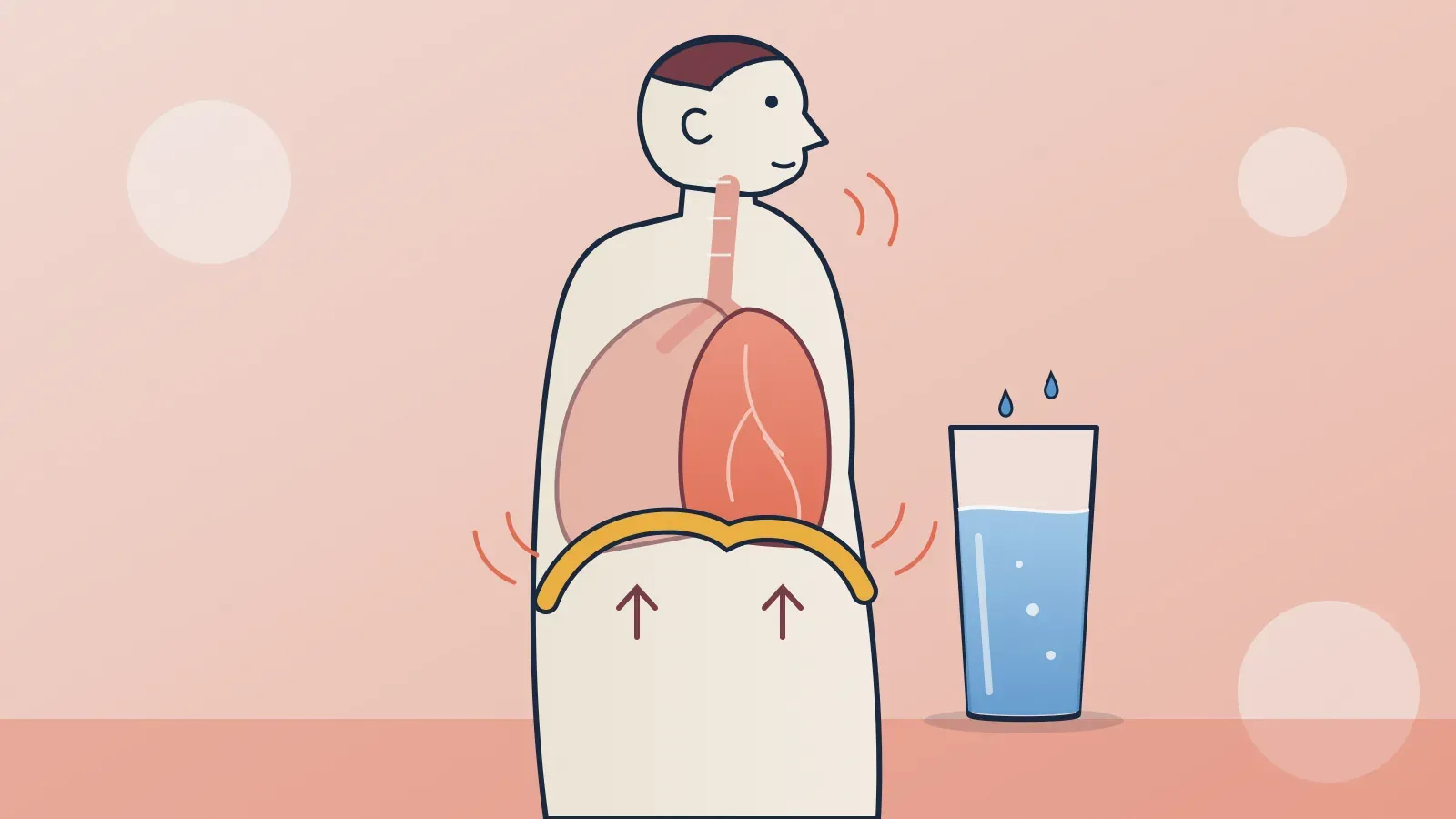
The main player is the diaphragm, the dome-shaped muscle that separates the chest from the abdomen and does most of the work of breathing. During a hiccup, it contracts suddenly and involuntarily, pulling air into the lungs. A split second later, the glottis, the opening between the vocal cords, snaps shut and stops the incoming air. That closure is what makes the hic sound.
All of this is controlled by a reflex arc. Signals travel to the central nervous system mainly through the vagus and phrenic nerves, are processed and then travel back along the phrenic nerve to the diaphragm. In theory, anything that irritates part of this circuit can trigger hiccups. Hiccups also happen in the womb: fetuses hiccup, and one hypothesis is that this helps train the breathing muscles, but there is no accepted explanation for any useful function of hiccups in adults.
Common hiccup triggers
Often there is no clear cause. When there is, the triggers most often cited by health bodies such as the UK's NHS and Mayo Clinic are:
- Fizzy drinks and too much alcohol.
- Eating too much or too quickly.
- Swallowing air, for example when chewing gum or smoking.
- Sudden temperature changes, such as having something very cold right after something hot.
- Strong emotions, stress or excitement.
Do the popular cures work?
Nearly everyone has a foolproof hiccup cure. The NHS lists several that people can try, such as holding your breath briefly, breathing into a paper bag, sipping ice-cold water, swallowing a little sugar or biting a lemon, but notes that they do not work for everyone. Scientific reviews reach a similar conclusion: these methods are popular and generally safe, but their effectiveness has never been established in rigorous studies.
There is at least some reasoning behind a few of them:
| Trick | The idea behind it | What is known |
|---|---|---|
| Holding your breath or breathing into a paper bag | Raising carbon dioxide in the blood, which may inhibit diaphragm contractions | Plausible physiological basis, not proven in trials |
| Sipping cold water, swallowing sugar, gargling | Stimulating the throat and interfering with vagus nerve signals | Case reports, no controlled studies |
| Pulling your knees to your chest and leaning forward | Compressing the chest and diaphragm | Suggested as an option, effectiveness unproven |
| Getting a sudden fright | Interrupting the reflex with a sudden reaction | No scientific evidence |
Since ordinary hiccups usually stop on their own within minutes, it is hard to know whether a trick worked or whether they would have passed anyway.
When to see a doctor
Hiccups lasting more than 48 hours are called persistent, and those lasting over a month are called intractable. These cases are rare but deserve attention, because they can be linked to another health condition or to the effect of a medicine. Possible causes listed by Mayo Clinic include irritation of the nerves that control the diaphragm, acid reflux, central nervous system problems, metabolic issues and certain medicines. Long-lasting cases are much more common in men.
See a health professional if your hiccups:
- Last longer than 48 hours.
- Interfere with eating, sleeping or breathing.
- Keep coming back often enough to affect daily life.
In those cases, a doctor will look for an underlying cause, and treating it or adjusting a medicine usually solves the problem. As for everyday hiccups, the good news is that they are harmless and short-lived: avoiding eating too fast and going easy on fizzy drinks and alcohol can help prevent them, and if they show up, they will most likely go away on their own within minutes.