What is the highest point on Earth? It depends where you start measuring
Above sea level, it is the summit of Everest, at 29,031.7 feet (8,848.86 m). But Chimborazo in Ecuador sits farther from Earth's center, and Hawaii's Mauna Kea is the tallest mountain from base to peak.
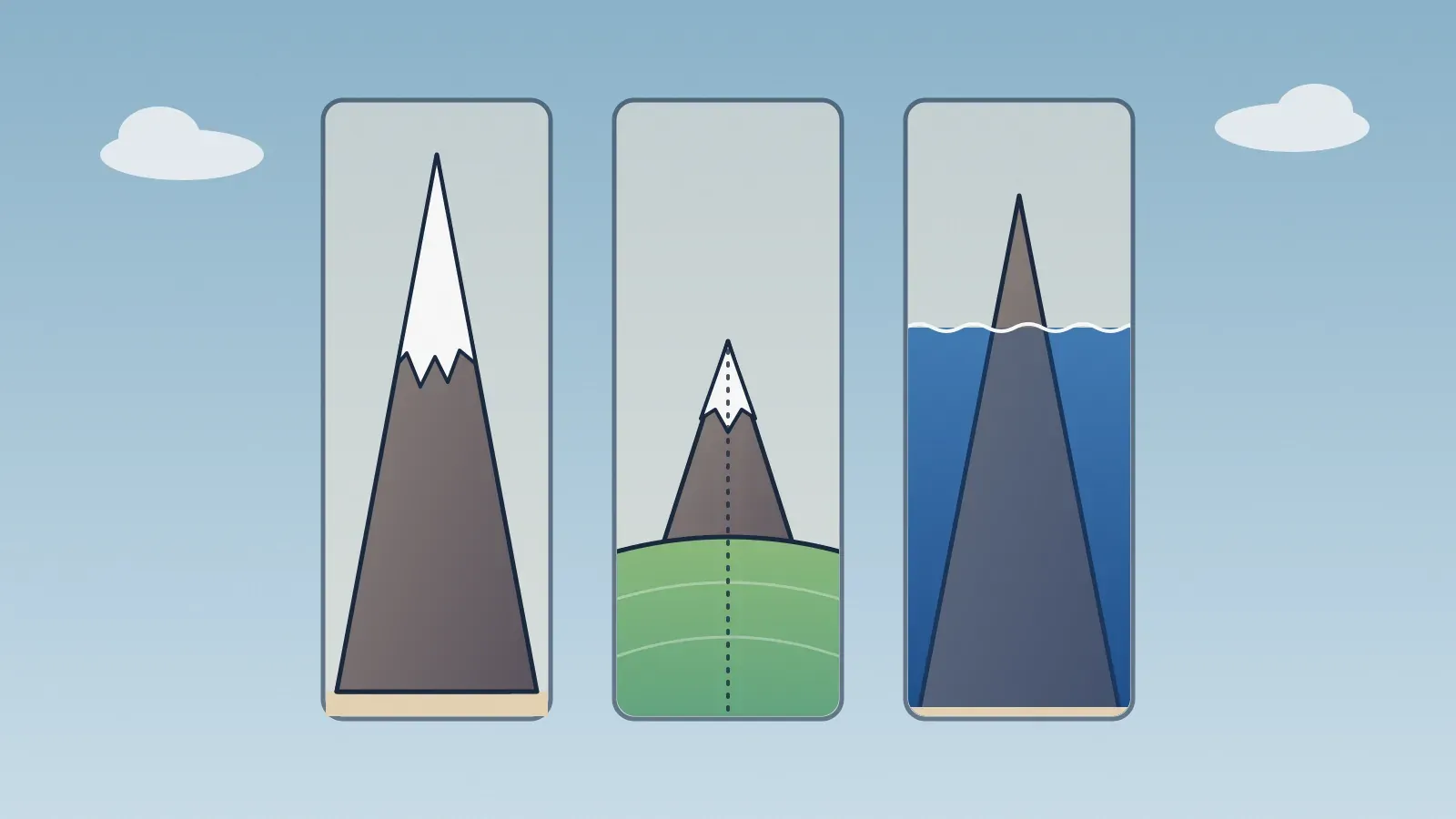
The highest point on Earth above sea level is the summit of Mount Everest, at 29,031.7 feet (8,848.86 meters), a figure China and Nepal announced in December 2020. Measure from the planet's center, though, and the farthest summit is Chimborazo, in Ecuador. And from base to peak, the tallest mountain is Mauna Kea.
Where does the 29,031.7-foot figure come from?
Everest sits in the Himalayas, right on the border between Nepal and China's Tibet region, so each country had its own number for the mountain. In December 2020 they jointly declared an official height of 8,848.86 meters, or 29,031.69 feet, according to Britannica. The survey teams used GPS and China's BeiDou satellite navigation, along with laser theodolites, instruments that measure angles with great precision.
The reference is mean sea level. Since you can't measure the ocean in the middle of Asia, geodesists use a mathematical model of the surface the sea would have if it continued beneath the continents. Satellites help tie each point on the ground to that model, the same family of technology that makes the GPS in your phone work.
Why has Everest's height changed over the years?
The mountain didn't leap up and down. What changed were the techniques, plus an old, surprisingly stubborn question: measure to the rock, or to the snow capping the summit? Nepal preferred the snow height; China at one point adopted the rock height. Some landmark surveys, according to Britannica:
| Survey | Height |
|---|---|
| Survey of India, 1952 to 1954 | 29,028 ft (8,848 m) |
| American expedition using GPS, 1999 | 29,035 ft (8,850 m), give or take 6.5 ft |
| Chinese expedition, 2005, rock height | 29,017.12 ft (8,844.43 m) |
| China and Nepal joint declaration, 2020 | 29,031.69 ft (8,848.86 m) |
The 2020 figure settled the disagreement, and the two countries now share one number for the peak that marks their border. On the north side of that summit lies China, one of the countries vying for the title of the country that borders the most nations.
So why is Chimborazo closer to space?
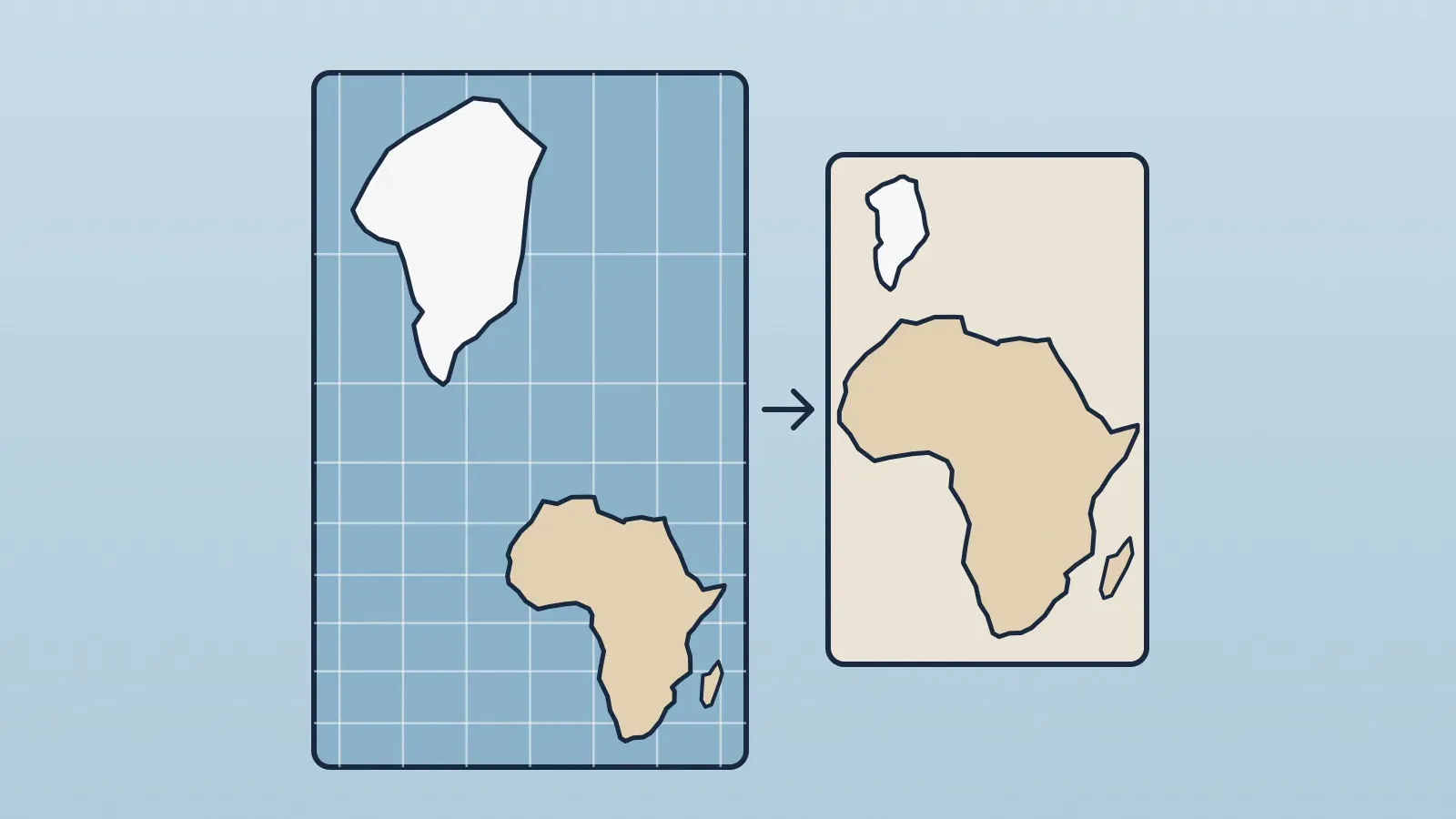
Because Earth is not a perfect ball. The planet's spin makes it slightly wider at the equator than at the poles, like a gently squashed ball rather than a perfect sphere. Anyone standing near the equator already starts farther from Earth's center, before climbing anything at all.
Chimborazo, a volcano in Ecuador's Andes, takes full advantage. It stands 20,564 feet (6,268 meters) above sea level, far lower than Everest, but it lies about one degree south of the equator, where the bulge is greatest. According to NOAA, the U.S. National Oceanic and Atmospheric Administration, Chimborazo's summit is more than 2,072 meters, about 6,800 feet, farther from Earth's center than Everest's peak. NOAA's own page also gives a slightly lower figure in feet, so treat the conversion as approximate.
That makes Chimborazo's top the point of solid ground closest to space, even though a climber up there breathes far more oxygen than on Everest. Air pressure depends on altitude above sea level, not on distance from the planet's center.
Isn't Mauna Kea the tallest mountain?
It is, if you count the part underwater. Mauna Kea, a volcano on Hawaii's Big Island, rises a little over 13,700 feet (about 4,200 meters) above the sea. But it starts on the floor of the Pacific, roughly 19,700 feet (about 6,000 meters) down. Measured from base to summit, it tops 33,000 feet: NOAA says more than 33,500 feet (10,210 meters), and Guinness World Records lists about 33,480 feet (10,205 meters). By that yardstick it is the tallest mountain in the world, well over 4,000 feet taller than Everest.
So which answer counts?
- Height above sea level: Everest, 29,031.7 ft (8,848.86 m). This is the standard used in atlases, maps and aviation.
- Distance from Earth's center: Chimborazo, more than 2 km (1.3 miles) ahead of Everest.
- Height from base to summit: Mauna Kea, at more than 33,000 feet (10,000 m), most of it underwater.
When someone asks for the highest point on the planet, the standard answer is still Everest, because sea level is the reference every country uses. The other two are right on their own terms. A climber on Chimborazo is closer to the stars; a diver at the foot of Mauna Kea is looking up at the tallest mountain there is. And anyone who reaches Everest's summit is standing higher above the sea than any other spot a person can walk to.