What Turns Autumn Leaves Yellow, Orange and Red
Green fades when trees stop making chlorophyll, revealing yellows that were in the leaf all along and reds made on the spot. Weather decides how bright the show will be, and a tropical climate explains why it is rare across much of Brazil.
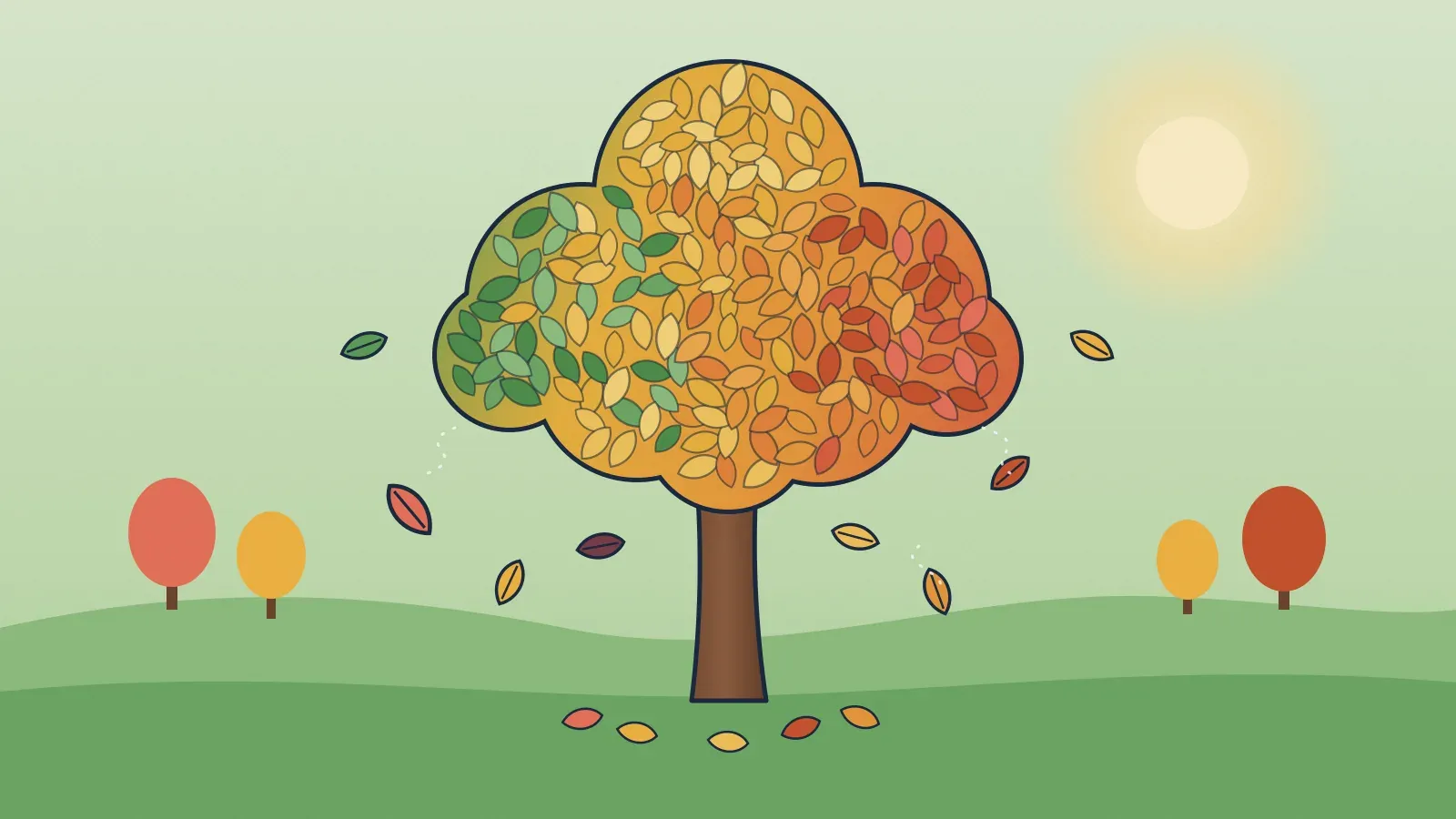
In temperate regions such as the northeastern United States, Canada, Europe and East Asia, forests swap green for yellow, orange, red and brown a few weeks before the leaves drop. Much of that change is what is left over when a tree dismantles the leaf's energy factory to get through winter.
Green comes from chlorophyll
Throughout spring and summer, leaves are packed with chlorophyll, the green pigment that captures sunlight for photosynthesis, the process that turns water and carbon dioxide into sugars. Chlorophyll breaks down in light and is constantly replaced, so while the tree is fully active, green dominates and hides the other pigments.
As autumn arrives, nights grow longer. US forestry and extension agencies explain that night length is the main signal that sets the process in motion, which is why the change starts at about the same time each year in a given place. The tree stops replacing chlorophyll, pulls some nutrients back out of the leaf, and builds a layer of cells at the base of the leaf stalk that will separate it from the branch, called the abscission layer.
The yellows and oranges were there all along
Once chlorophyll disappears, carotenoids show through. These yellow and orange pigments were in the leaf the whole time, masked by green. Because they already exist and need no new production, yellows tend to be fairly consistent from one year to the next.
- Chlorophyll: green; fades in autumn because it is no longer replaced.
- Carotenoids: yellow and orange; present all year, visible once the green is gone.
- Anthocyanins: red and purple; made in autumn by some species.
- Tannins: brown; what remains after the other pigments have broken down.
Red is made in autumn
Reds and purples have a different origin. Anthocyanins are generally not present in the leaf during summer. They are produced in autumn from sugars that become trapped in the leaf as the abscission layer forms and transport routes close off. Not every tree does this. Maples, sweetgums and some oaks are among those that turn red, while birches and aspens lean toward yellow.
Why spend energy making a pigment in a leaf that is about to fall? There is no consensus yet. One of the most studied hypotheses is that anthocyanins act as a sunscreen, protecting the leaf while the tree reclaims its nutrients. Other ideas exist, and the question is still debated among scientists.
Why some years are more colorful
If night length decides when the process starts, weather decides how intense it gets. The strongest reds follow warm, sunny days, which produce plenty of sugar, combined with cool but frost-free nights, which keep that sugar in the leaf. According to the US National Arboretum, the ideal scenario is a moist growing season followed by a dry, sunny, cool autumn.
Some conditions get in the way. A hard, early frost can kill leaves before color develops, because freezing damages the machinery that makes anthocyanins. Severe drought can make trees drop leaves early or delay the change.
Why it is rare across much of Brazil
Most of Brazil lies in the tropics. Near the equator, day length changes little through the year, and many regions get no cold autumn nights. Without those cues, many native trees of the Amazon and the Atlantic Forest keep their leaves year-round. In biomes such as the Cerrado savanna and the Caatinga dry forest, many species do shed leaves, but the main trigger is lack of water in the dry season rather than cold, and leaf drop usually comes without a show of reds. There, dry-season color comes mostly from flowers, such as those of ipê trees.
In the south and in the highlands of the southeast, autumn is more pronounced, and that is where golden scenery appears. Much of it, however, comes from trees brought over from the Northern Hemisphere, such as plane trees and sweetgums, planted along streets and in parks.
In short: green leaves because the tree stops making chlorophyll, yellow was hidden all along, and red is made on the spot with help from sunny days and cool nights. To forecast a good autumn, watch the weather: a summer with enough rain and a dry, bright, frost-free fall usually bring the most intense colors.