Where Does Chocolate Come From? From Amazon Cacao to the 19th-Century Bar
Chocolate is made from the seeds of the cacao tree, native to South America. People in the Ecuadorian Amazon used cacao 5,300 years ago; the Maya and Aztecs made it a drink, and the bar only appeared in industrial Europe.
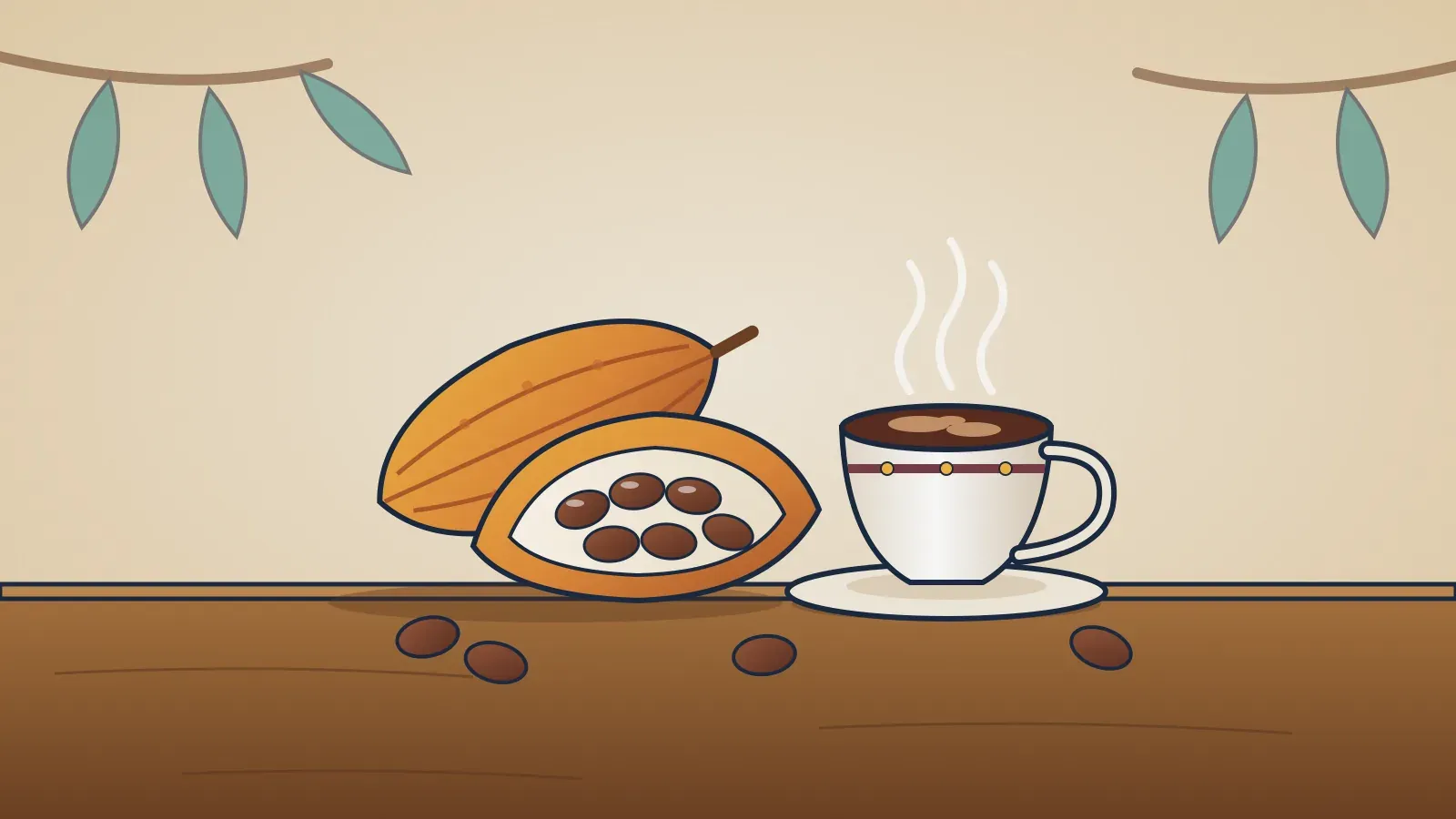
Chocolate comes from the seeds of the cacao tree (Theobroma cacao), which is native to South America. The oldest known use is in the Ecuadorian Amazon, about 5,300 years ago. Cacao later became a prized drink among the Maya and Aztecs, reached Europe in the 16th century and only turned into a bar in the 19th century.
In other words, for thousands of years chocolate was something people drank, not something they bit into. The paper-wrapped bar is a recent invention, a product of industrial machinery. The story starts with a tree and with an archaeological discovery that redrew the map.
Where was cacao first used?
For a long time, researchers thought cacao had been domesticated in Mesoamerica, the region stretching from central Mexico through Central America. The oldest archaeological evidence of cacao use there was about 3,900 years old.
A 2018 study in Nature Ecology & Evolution changed that picture. An international team that included the University of British Columbia examined pottery from Santa Ana-La Florida, a site in southeastern Ecuador linked to the Mayo-Chinchipe culture. The researchers found three independent lines of evidence in the vessels and fragments:
- starch grains specific to the cacao tree;
- residues of theobromine, a bitter compound found in cacao but not in its wild relatives;
- ancient DNA sequences unique to the cacao tree.
According to the study, the Mayo-Chinchipe people used cacao between 5,300 and 2,100 years ago. The authors conclude that cacao was domesticated in the upper Amazon at least 1,500 years before it was used in Central America. Whether that cacao was drunk, eaten or used some other way is still unknown; what the evidence shows is that it was inside their pots.
How did the Maya and Aztecs drink chocolate?
Mesoamerica is where cacao took on the cultural role we now associate with chocolate. The seeds were roasted, ground and mixed with water. The liquid was poured from one vessel to another until it foamed, and the foam was the most prized part. The Maya are among the first peoples with written records of cacao consumption.
The Aztecs called the drink cacahuatl and served it cold, sometimes with chili, spices and cornmeal. It had no sugar and was associated with warriors and nobility. Cacao beans were valuable enough to work as currency, and rulers kept large stores of them. When the Spanish arrived, that empire was fairly young: Oxford University is older than the Aztec Empire.
When did chocolate reach Europe?
On Christopher Columbus's fourth voyage, which began in 1502, the Spanish came across cacao beans but paid them little attention. Early European reactions to the drink were far from flattering: the chronicler Girolamo Benzoni wrote that it seemed more like a drink for pigs than for people.
The first clear record of chocolate on European soil, according to historians Sophie and Michael Coe, dates to 1544, when Dominican friars brought a delegation of Maya nobles to visit Prince Philip, the future king of Spain. By the late 16th century, colonial kitchens were mixing cacao with sugar, making the drink sweet and, more and more often, hot.
Sweetened chocolate became fashionable among the Spanish elite and spread across Europe in the 17th century. In France, the habit of drinking chocolate at breakfast gained ground with Anne of Austria, a Spanish princess who married Louis XIII.
When was the chocolate bar invented?
Turning cacao into a bar required a technical shift. In 1828, Dutchman Coenraad van Houten patented a process that used a press to remove much of the fat, the cocoa butter, from roasted, ground beans. The result was cocoa powder, which dissolves more easily.
The leftover cocoa butter opened another door. In 1847, the English firm Fry and Sons combined cocoa butter, chocolate liquor and sugar to make sweet chocolate meant for eating rather than drinking. In 1876, Swiss chocolatier Daniel Peter added dried milk and created milk chocolate.
| When | Milestone |
|---|---|
| 5,300 years ago | Cacao used at Santa Ana-La Florida, Ecuador |
| 3,900 years ago | Oldest evidence of cacao use in Mesoamerica |
| 1544 | First clear record of chocolate in Europe, according to Sophie and Michael Coe |
| 1828 | Van Houten patents the press that yields cocoa powder |
| 1847 | Fry and Sons makes sweet eating chocolate |
| 1876 | Daniel Peter creates milk chocolate |
What is left of the original drink?
An industrial candy bar is a long way from the foamy, chili-spiked cacahuatl of the Aztecs, but the core ingredient is the same. Chocolate's story is also a reminder that many foods that seem European were born in the Americas and reinvented across the Atlantic. Another dessert with a past full of legends is ice cream, so it is worth reading about who invented ice cream and which stories are myths.
So the next time someone orders a hot chocolate, they are closer to the original than anyone biting into a bar: cacao was used for more than five thousand years before anyone thought of making it solid.