Why Is the Keyboard QWERTY and Not in Alphabetical Order? What History Shows
The QWERTY layout was born on Christopher Sholes's typewriter in the 1870s and adjusted step by step until it became the standard. The idea that it was designed to slow typists down has no support in the historical record.
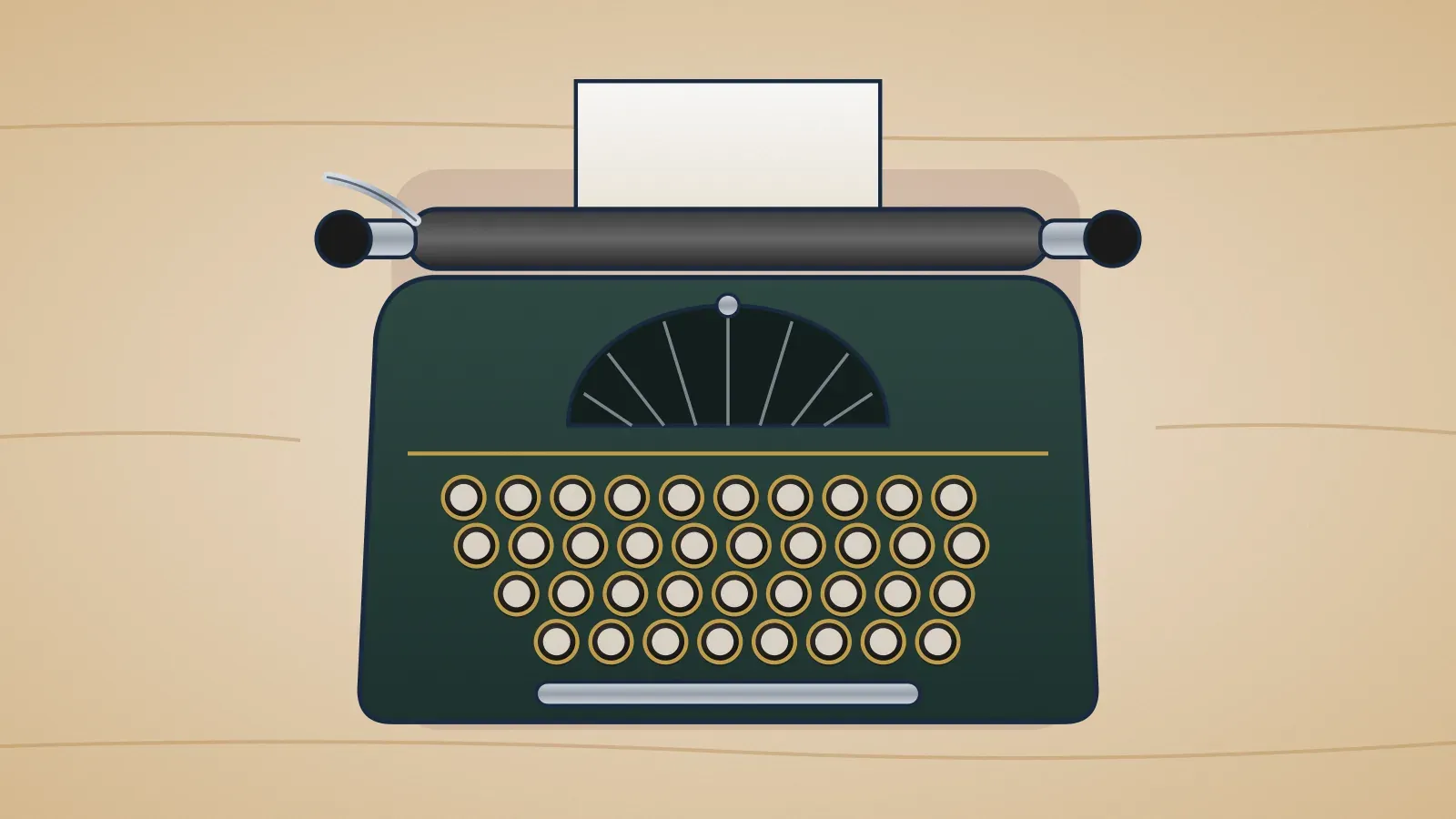
Keyboards are QWERTY because they inherited the layout of Christopher Latham Sholes's typewriters, sold by Remington from 1874. His first model had its letters in alphabetical order, but the design shifted over years of trial and error. Once QWERTY became the industry standard, computers simply copied it.
The most repeated explanation for this odd order says Sholes scattered the letters to make people type more slowly so the machine's typebars would not jam. Historical research tells a much messier, and far less deliberate, story.
What did the first typewriter keyboard look like?
Sholes was a printer, newspaperman and politician in Milwaukee, Wisconsin, and an inventor in his spare time. In 1868, he and his partners Samuel Soulé, Carlos Glidden and James Densmore patented a typewriter. The keyboard on that first model looked like a piano, with 28 keys in alphabetical order.
Alphabetical order did not survive contact with the first users. According to researchers Koichi Yasuoka and Motoko Yasuoka of Kyoto University, many early customers were telegraph operators who transcribed Morse code messages. They found the alphabetical layout awkward for that work, and their feedback reshaped the keyboard model after model. The very first machine, shipped in November 1868, went to Edward Payson Porter of Porter's Telegraph College in Chicago. The Yasuokas even argue that S ended up near Z and E because those letters were easy to confuse in American Morse code.
How did the QWERTY order take shape?
The change was gradual, with no single plan behind it. The Yasuokas reconstructed the stages from patents, letters and advertisements of the time, and they sum it up this way: there was no consistent policy toward QWERTY.
- 1868: first model, with 28 keys in alphabetical order.
- 1873: Sholes and his partners sign a manufacturing contract with Remington on March 1.
- 1874: Remington launches the Sholes & Glidden Type-Writer.
- 1878: Sholes receives U.S. patent 207,559, the first documented QWERTY layout.
- 1893: five major manufacturers merge into the Union Typewriter Company and adopt QWERTY as their standard.
According to Smithsonian Magazine, more than 100,000 QWERTY Remington typewriters were in use by 1890. Typists trained on one layout did not want to switch machines, and manufacturers did not want to sell a keyboard nobody knew how to use. Teletype machines adopted QWERTY in the 1910s, and from there it moved on to computer terminals.
Was QWERTY designed to slow typists down?
There is no evidence for that. The Yasuokas' paper calls the claim nonsense and points out that telegraph operators, the machine's first users, had to keep pace with whoever was sending the message. A machine built to slow them down would have made no sense.
The idea that Sholes separated common letter pairs to avoid jams also runs into a problem: the pair ER, one of the most frequent in English, sits side by side on QWERTY. Sources differ on exactly where ER ranks, but agree that it is very common. The Yasuokas themselves admit that the origin of QWERTY has not been fully explained; what they reject is the notion of a plan to slow typists down.
Are there better keyboard layouts than QWERTY?
The best-known rival is the Dvorak keyboard, created in the 1930s by American educator August Dvorak. It puts the most common English letters on the home row, where the fingers rest, and its users reported faster and more accurate typing. More recent research, however, disputes how large that advantage really is, and Dvorak never threatened QWERTY's dominance.
QWERTY also has regional variants. France uses AZERTY, which swaps several letters around. In 2019, the French standards body AFNOR published standard NF Z71-300, with a revised AZERTY that makes accented capitals and the ligature œ easier to type, plus BÉPO, a 2003 layout inspired by Dvorak. Brazil's common ABNT2 layout keeps the QWERTY base and adds a Ç key and Portuguese accent keys.
Why does nobody switch?
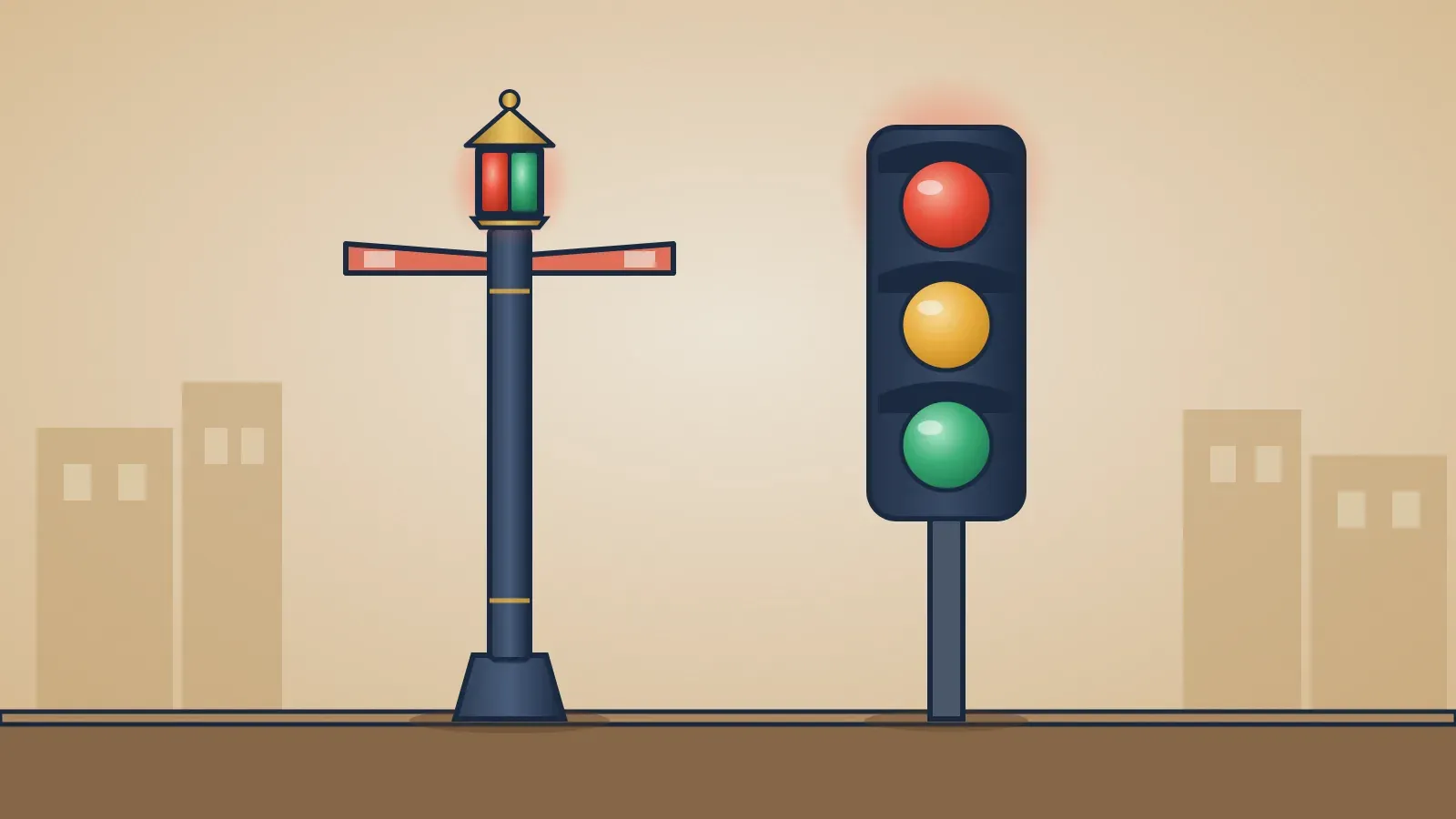
The answer has less to do with efficiency than with habit. A convention learned by millions of people is hard to change, even when alternatives appear. Something similar happened with the red, yellow and green of traffic lights, inherited from the railroads, and even with the seven-day week, which outlasted empires and calendar reforms.
If the keyboard on your phone also starts with Q, W, E, R, T and Y, that is at least partly thanks to 19th-century telegraph operators who found alphabetical order impractical. Since then, no alternative has been strong enough to undo what they helped shape.