What Is the Largest Desert in the World? It's Antarctica, Not the Sahara
By the rainfall definition, the world's largest desert is Antarctica, at about 5.4 million square miles. The Sahara is the largest hot desert, and Chile's Atacama is among the driest places on Earth.
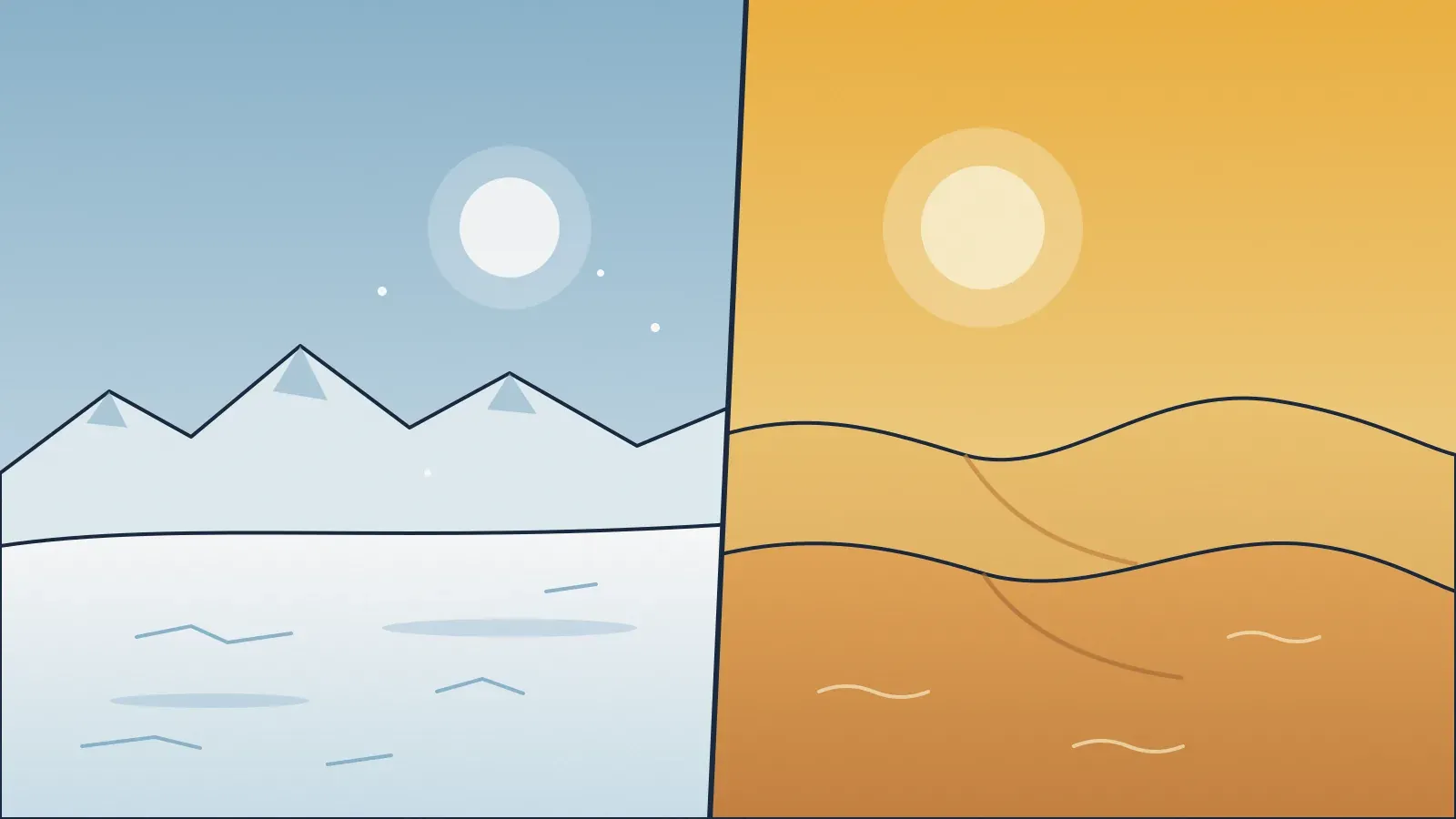
The largest desert in the world is Antarctica, covering about 5.4 million square miles (14 million km²). Calling an ice-covered continent a desert may sound odd, but deserts are defined by a lack of rain or snow, not by heat or sand. The Sahara, at roughly 3.5 million square miles (9 million km²), is the largest hot desert.
What makes a place a desert?
The most widely used definition is about climate. Under the system proposed by geographer Peveril Meigs in 1953, which the US Geological Survey (USGS) cites, arid lands get less than 10 inches (250 mm) of precipitation a year. If they go 12 months in a row without rain, they are extremely arid. Both categories count as desert.
Places that get 10 to 20 inches (250 to 500 mm) a year are called semiarid and usually do not count: they are steppes rather than deserts. By the rainfall yardstick, about one-third of Earth's land surface is desert, according to the USGS.
Notice that the rule is about precipitation, which includes snow. Temperature does not come into it. That is why a frozen place can be every bit as much a desert as a scorching one.
Why is Antarctica considered a desert?
Because it hardly ever snows there. According to Guinness World Records, the continent's interior may get only about 2 inches (50 mm) of precipitation a year, a fifth of the desert threshold. The ice sheet that covers about 98% of Antarctica did not come from heavy snowstorms; it is a little snow, piled up over a very long time, that almost never melts.
The cold explains the dryness. Very cold air holds little moisture, and over the poles the air tends to sink, creating high pressure and few clouds. Britannica calls Antarctica the world's largest “technical” desert: the Sahara got famous as the biggest, but Antarctica's ice plains cover more ground.
Is the Arctic a desert too?
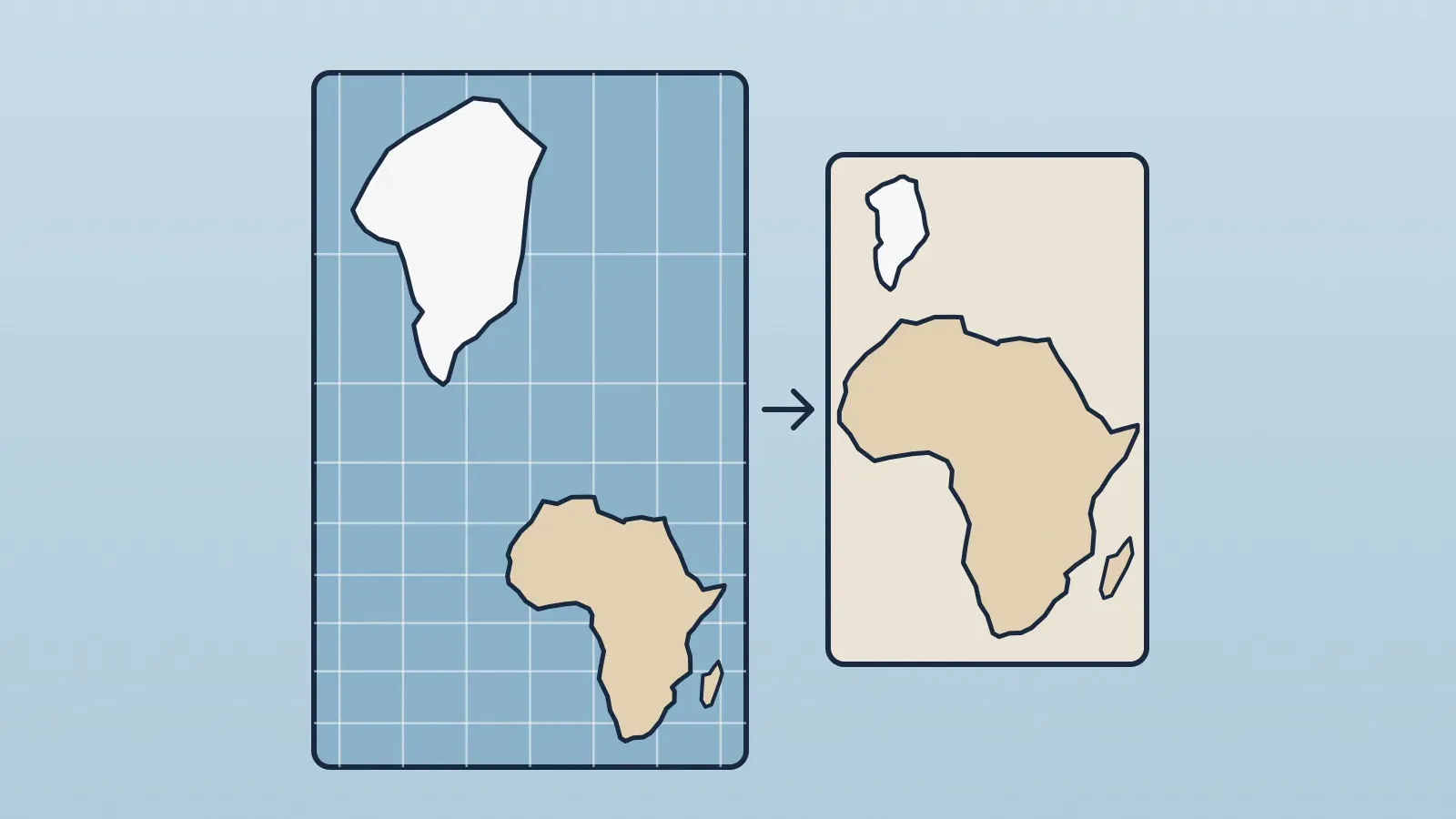
Yes. Much of the land around the North Pole, in Canada, Alaska, Russia and Greenland, is also polar desert, and many lists put the Arctic second among the largest deserts. Central Greenland, for instance, gets only a few inches of snow a year. That icy island is famous for another reason too: it looks far bigger on maps than it really is.
Figures for the Arctic vary widely from source to source, because there is no agreement on where it begins and ends. So the race for second place depends on who is drawing up the list.
What is the largest hot desert?
The Sahara, in North Africa. Sources disagree a little on its size: Guinness puts it at 9.1 million km² (about 3.5 million square miles); Britannica says some 3.32 million square miles (about 8.6 million km²). The gap comes from where each one draws the desert's edges, which blend into steppe to the south and north.
Whatever the exact figure, the Sahara is the largest desert outside the polar regions. It lies under a belt of subtropical high pressure: air that rises near the equator drops its moisture as rain and comes down dry on the other side, which keeps clouds from forming.
| Desert | Type | Approximate area |
|---|---|---|
| Antarctica | Polar | 5.4 million sq mi (14 million km²) |
| Arctic | Polar | Varies with the boundary used |
| Sahara | Hot | 3.3 to 3.5 million sq mi (8.6 to 9.1 million km²) |
So which desert is the driest?
Size and dryness are different questions. The Atacama, in northern Chile, is much smaller than the Sahara but ranks among the driest places on Earth. According to the European Space Agency (ESA), only Antarctica's dry valleys are drier. In much of the Atacama, rain falls just two to four times a century, and some spots have no recorded rainfall at all.
What little moisture arrives comes as a coastal fog called camanchaca. Local people string up nets to catch the fog and collect water.
Why do so many people say the Sahara?
Because the word desert brings to mind dunes, sun and heat, and the Sahara is the best-known example. The answer changes once you follow the geographers' definition. Antarctica also defies other labels: it is a continent with no native population, a case as unusual as the debate over whether Australia is a continent or an island.
In short: the planet's largest desert is white and frozen, its largest hot desert is the Sahara, and its driest outside the poles is the Atacama. Three different records, each answering its own question.