Where Did the Dollar Sign Come From? The Answer Starts With Spanish Pesos
The most widely accepted explanation is that the dollar sign grew out of a handwritten abbreviation for pesos, the Spanish silver coin. The Pillars of Hercules and U-over-S stories lack documentary support.
The most widely accepted explanation is that the dollar sign began as handwriting. In the 18th century, merchants wrote pesos, the Spanish silver coin, as "ps" or as a P with a small raised s. Written in a hurry, the S ended up on top of the P, and all that remained of the P was its vertical stroke.
Why pesos and not dollars?
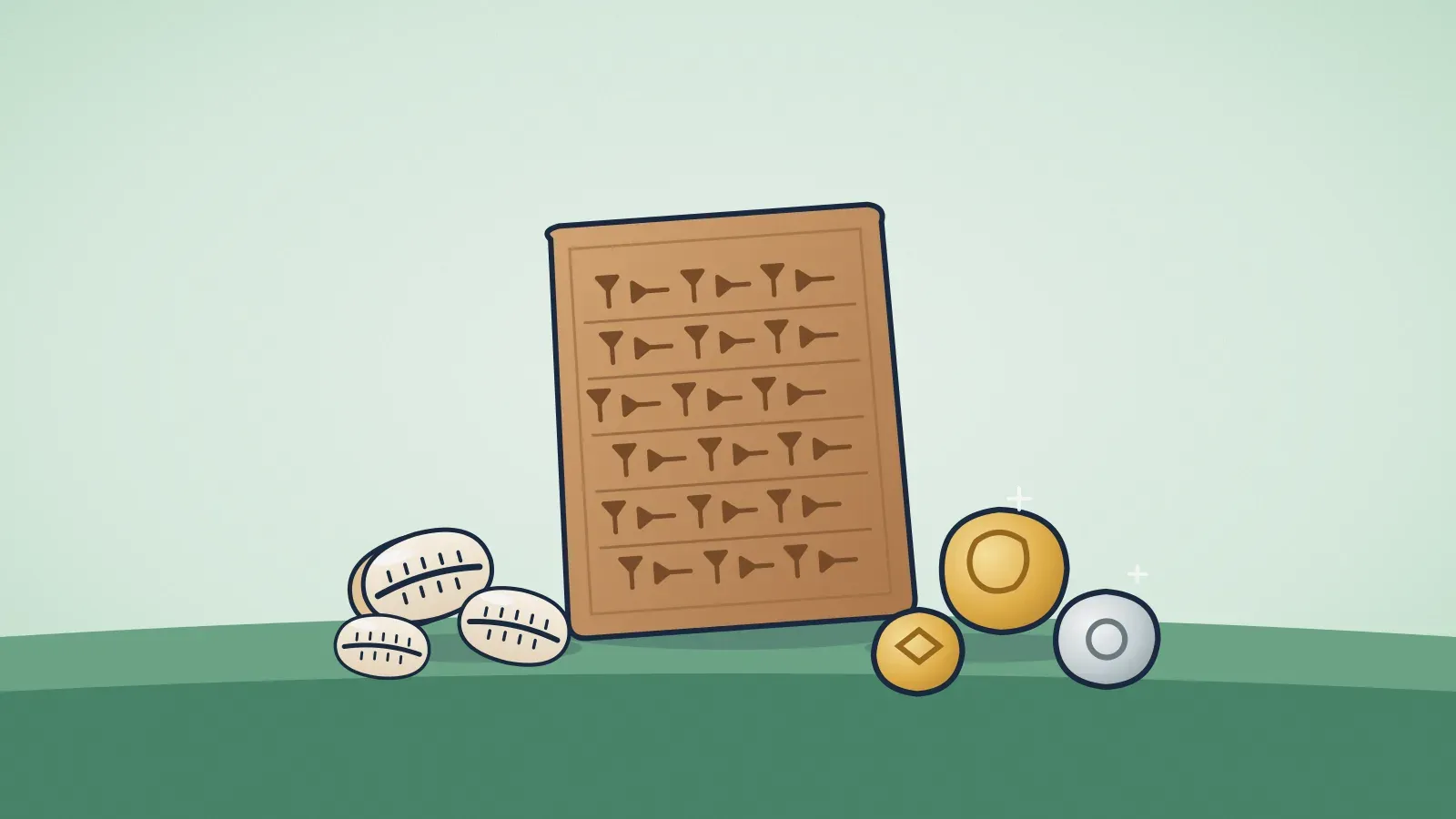
Because when the symbol appeared, the U.S. dollar did not exist yet. The coin with the most reach in the Americas was the Spanish silver peso, the peso of eight reales, known in English as pieces of eight or the Spanish dollar. According to HISTORY, it was accepted as the basic unit of value in colonial America during the late 1700s.
The word dollar itself has European roots. It comes from the thaler, a silver coin minted in Bohemia, in Central Europe, in the early 1500s. The peso stayed so common that, according to the design publication 99% Invisible, it remained legal tender in the United States until 1857.
What evidence supports the peso theory?
According to HISTORY, handwritten manuscripts show the peso abbreviated as PS, often with the S written on top of the P, which already produced something close to the $. The Dictionary of American History, reproduced on Encyclopedia.com, agrees: it says the dollar sign is most probably a conventionalized combination of the letters p and s for pesos.
The same dictionary notes that a government clerk used such a mark as early as 1788 and that the present symbol came into general use shortly afterward. The Oxford English Dictionary, as cited by 99% Invisible, goes further back, recording the symbol from the 1770s, and says it started to appear in print after 1800. HISTORY gives the same date for its printed use.
That timeline is the strongest argument. The sign shows up in the accounts of people dealing in pesos as early as the 1770s, which undercuts several alternative stories. The same dictionary lists some of them: a mark on government mailbags standing for U.S. or Uncle Sam, and the Pillars of Hercules.
What about the Pillars of Hercules?
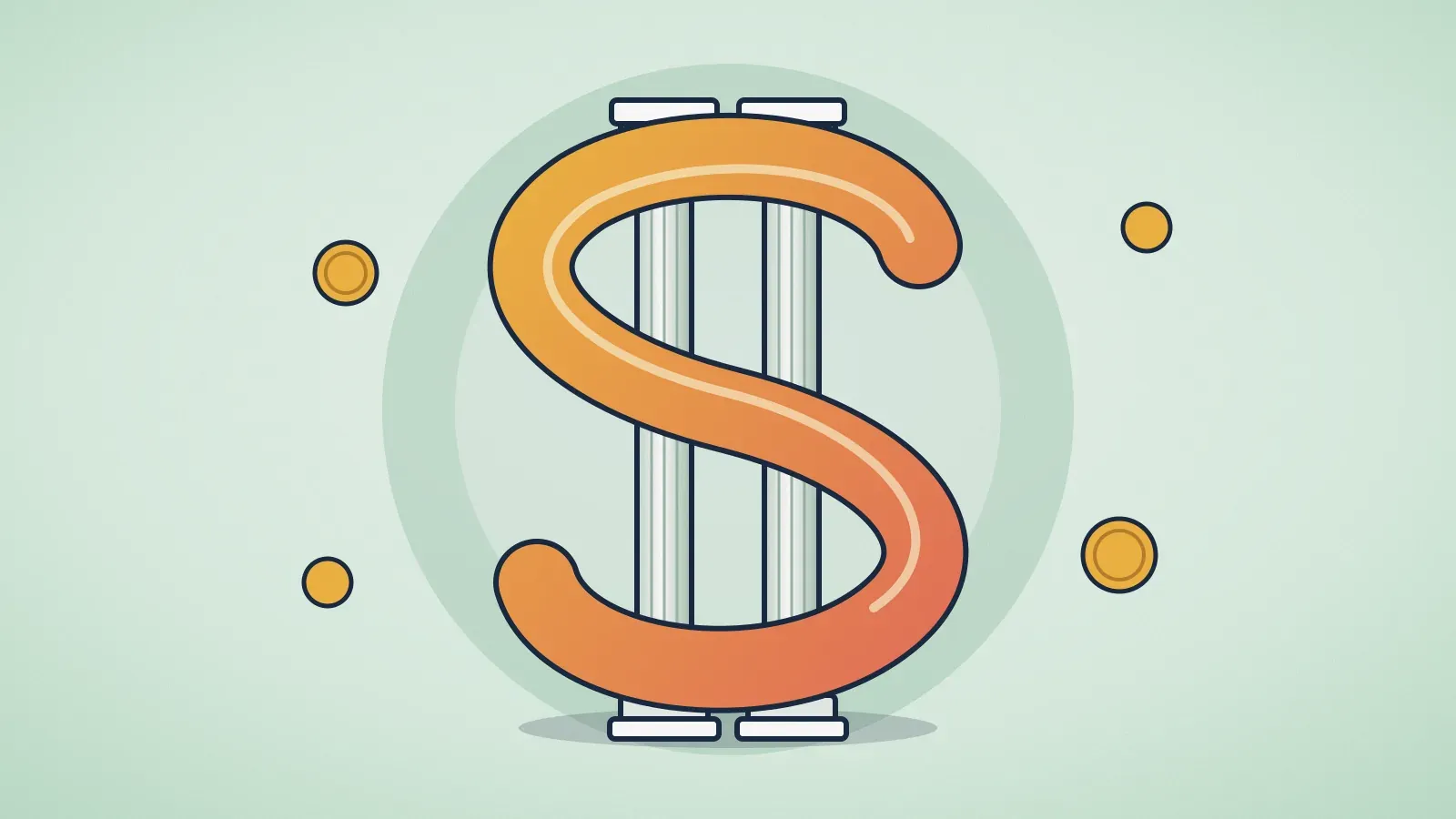
One of the most repeated versions ties the sign to Spanish coins, which showed two columns, the Pillars of Hercules, wrapped in a banner with the motto Plus Ultra, roughly "further beyond." Before Columbus, the motto was Non plus ultra, "nothing further beyond," because the pillars marked the edge of the known world at the Strait of Gibraltar; after his voyages, the "non" was dropped. According to 99% Invisible, the pillar emblem was adopted by Ferdinand II of Aragon in the 1400s, and the theory holds that the S-shaped banners around the columns turned into the dollar sign.
The resemblance is real, and the pillars really were on the pesos circulating in the Americas. The weak spot is that no documents show the coin design turning into the written sign, while the evolution of "ps" does appear in manuscripts. So the theory is intriguing but unproven.
Is it a U on top of an S?
Another popular explanation says the sign is a U laid over an S, for United States, with the bottom of the U missing. According to HISTORY, this idea appears in Ayn Rand's 1957 novel Atlas Shrugged, and no documentary evidence supports it. 99% Invisible calls it a presumed false etymology and mentions a variant in which the letters stand for "units of silver," which is just as unproven.
The timeline works against it, too: if the sign was already turning up in the 1770s, in the accounts of people dealing in Spanish pesos, it did not need the initials of a new country to come into being.
Why do other currencies use the $?
Because the symbol was born attached to the peso and only later became the mark of the dollar, it ended up serving several currencies. In Brazil, according to the country's central bank, the real has been written as R$ since 1994. The Mexican peso and other Latin American pesos use $ as well, which is why letters are often added to avoid confusion, as in US$ for the U.S. dollar.
The shape varies too: some dollar signs have one vertical stroke and others two, and both forms live on in computer fonts and handwriting. If symbol stories are your thing, see why @ is called the at sign, or find out why the dollar is the world's most used currency, one reason the $ is so firmly tied to it.