Why Don't Birds Get Electrocuted on Power Lines? (And When They Do)
A bird on a single wire has no voltage difference across its body, so almost no current flows through it. Touching a second wire or the pole changes everything.
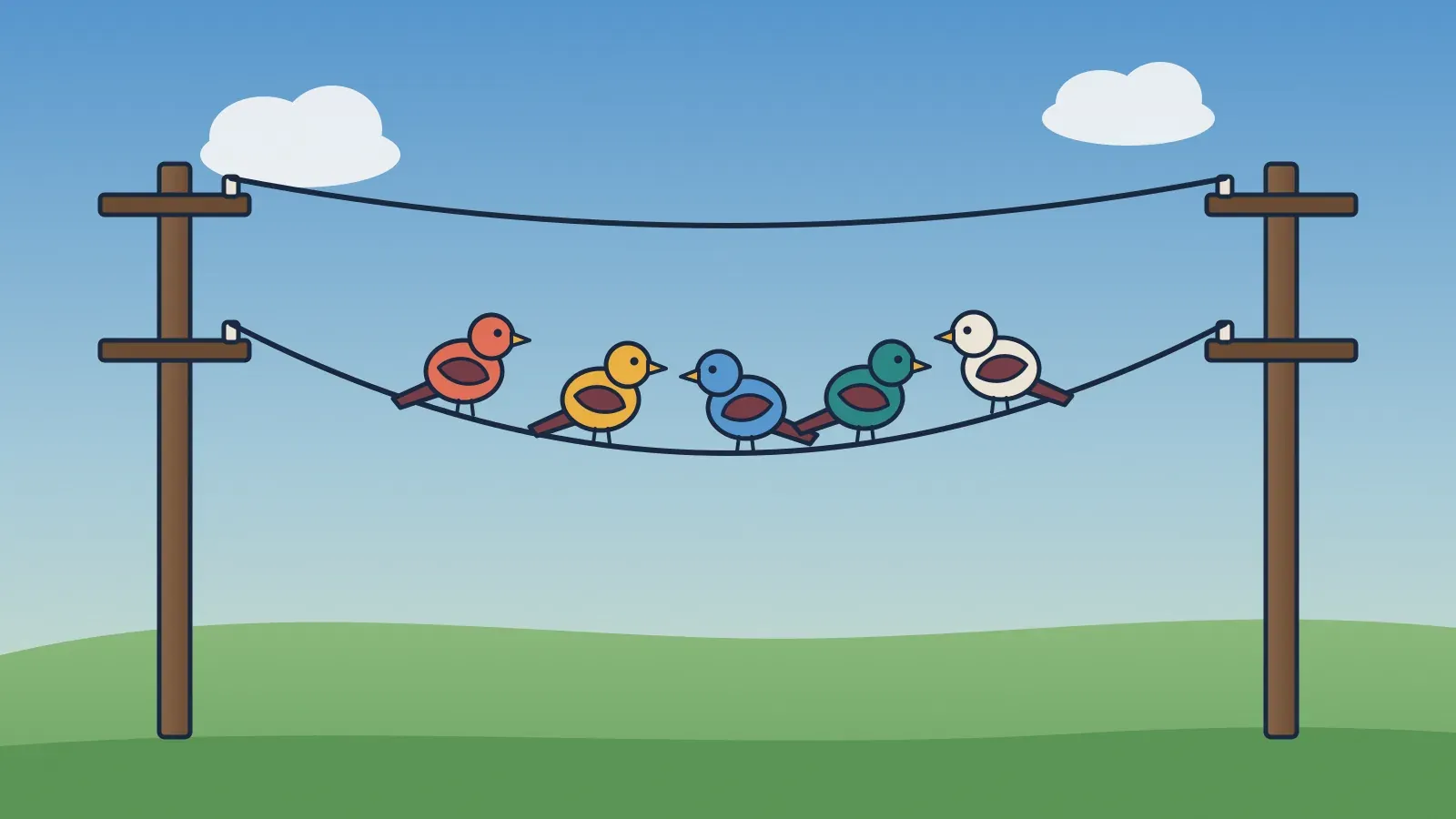
Birds don't get electrocuted on power lines because electricity only flows through a body when there is a voltage difference between two points on it. A bird perched on a single wire has both feet at nearly the same voltage, so almost no current passes through it. The danger comes when it touches another wire, the pole or something grounded.
If the wire carries high voltage, why doesn't the bird feel it?
Voltage is always a comparison between two points. As physicist Robert Matthews explains in BBC Science Focus Magazine, it is not voltages as such that kill but voltage differences, which are needed for electricity to flow. A bird sitting on a 35,000-volt line stays safe because there is no voltage difference across its body.
A bird's feet are close together on the same conductor, so the difference between them is far too small to matter. An analogy helps: electric current behaves a bit like water in a pipe, which only flows when there is a difference in height. If the whole body sits at the same level, electricity has no reason to cross it and simply keeps moving along the metal wire.
When do birds get electrocuted?
A shock happens when a bird's body bridges two points at different voltages. According to the U.S. Geological Survey (USGS), that occurs when it touches two energized parts at once, or an energized part and a grounded metal part. The shock usually causes severe, typically fatal, injury to the heart and blood vessels. Typical scenarios include:
- Touching two wires at the same time with the wings, beak or feet.
- Touching a wire and a grounded metal part at once, such as a ground wire or certain hardware on the pole.
- Perching with wet feathers: dry feathers conduct poorly, but current can pass when they are soaked or when skin, talons or beak touch the conductors.
- Landing on transformers and other equipment with several energized parts close together.
It is the same logic that drives electricity on a giant scale in lightning, which needs a path to the ground: current flows wherever there is a voltage difference and a path to follow.
Why are large birds at greater risk?
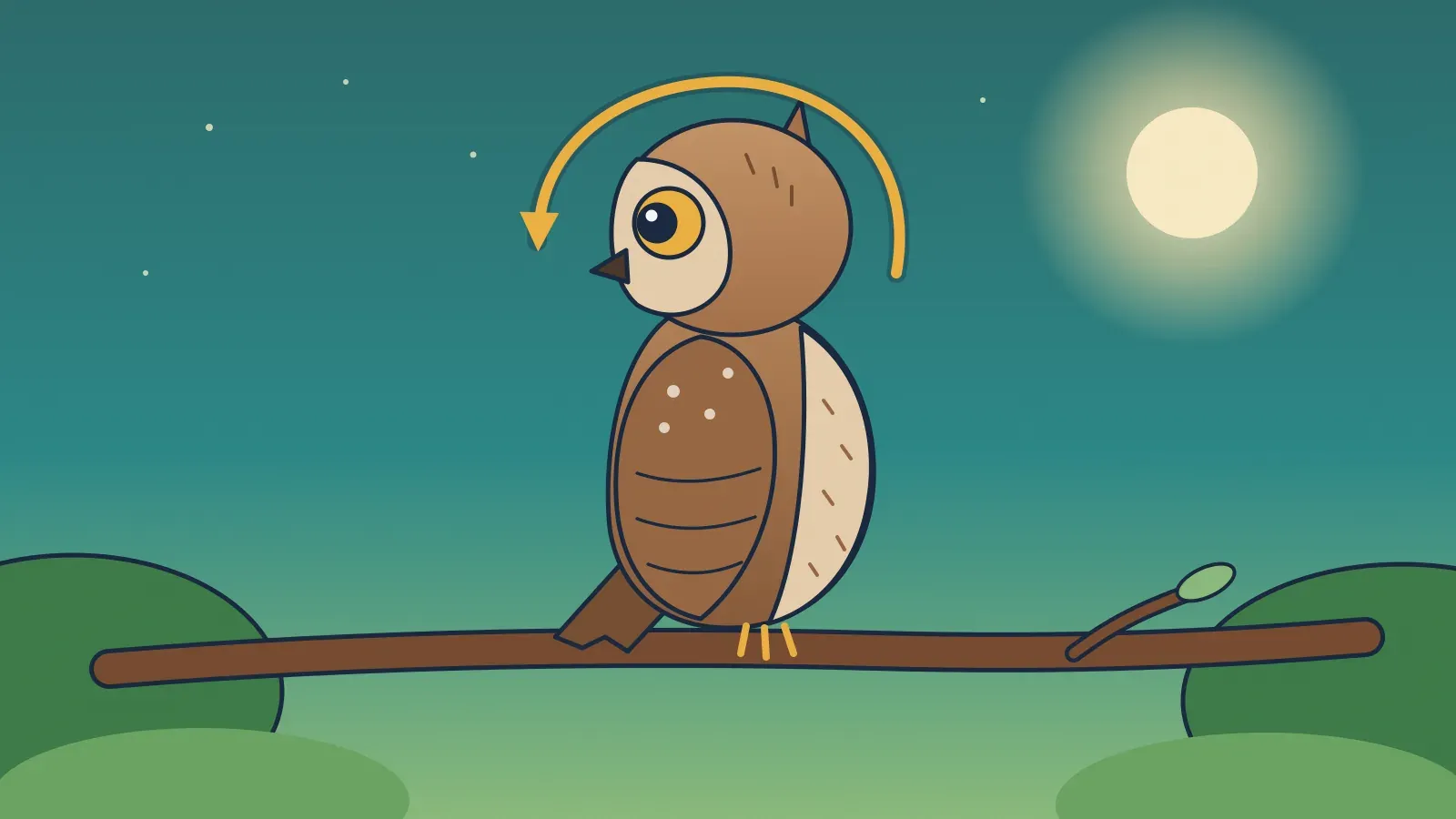
Size matters. The USGS notes that most electrocutions happen where conductors are spaced closer together than the wingspan of the birds using the poles. A sparrow can hardly reach two wires. An eagle, a hawk or one of the owls famous for turning their heads 270 degrees spreading its wings to land or take off can. The most common contact points are wrist to wrist or wing to foot.
Birds of prey are hit especially often because they like to perch on poles and sometimes even nest on them. There is a counterintuitive twist: birds die more often on distribution lines, which carry lower voltage, than on big transmission lines, because the wires on distribution lines are closer together.
The scale of the problem is large. In Spain, the Ministry for the Ecological Transition estimates that several tens of thousands of birds are electrocuted every year, and electrocution is one of the main conservation problems for several threatened species there. Spain has specific rules requiring high-voltage lines to be adapted to protect wildlife, and utilities in many places space their cables farther apart to reduce the risk to large birds.
Why can't a person do the same thing?
Because in real life we are almost never isolated like a bird in the middle of a wire. A person standing on the ground, on a ladder or on a roof, or holding a pole, easily becomes the path between the wire and the earth, and the current then runs through the body. The very rule that protects the bird is what makes power lines deadly for us. So:
- Never touch power lines or go near them, including lines lying on the ground, which may still be energized.
- Keep ladders, poles and tools well away. The Texas Department of Insurance advises staying at least 10 feet (about 3 meters) from overhead lines.
- If you see a downed line, stay away, keep others away and call the utility or 911.
- If a line falls on your car, stay inside until help arrives unless there is a fire.
The bird on the wire has no superpower. It is simply sitting in the one spot where physics leaves it alone, and a single extra point of contact is enough to turn that same rule against it.