Where Does the Word Quarantine Come From? The 40 Days Behind the Name
Quarantine comes from the Italian quarantena, from quaranta, forty. The name recalls the 40-day wait imposed on ships and travelers during the plague epidemics of the late Middle Ages.
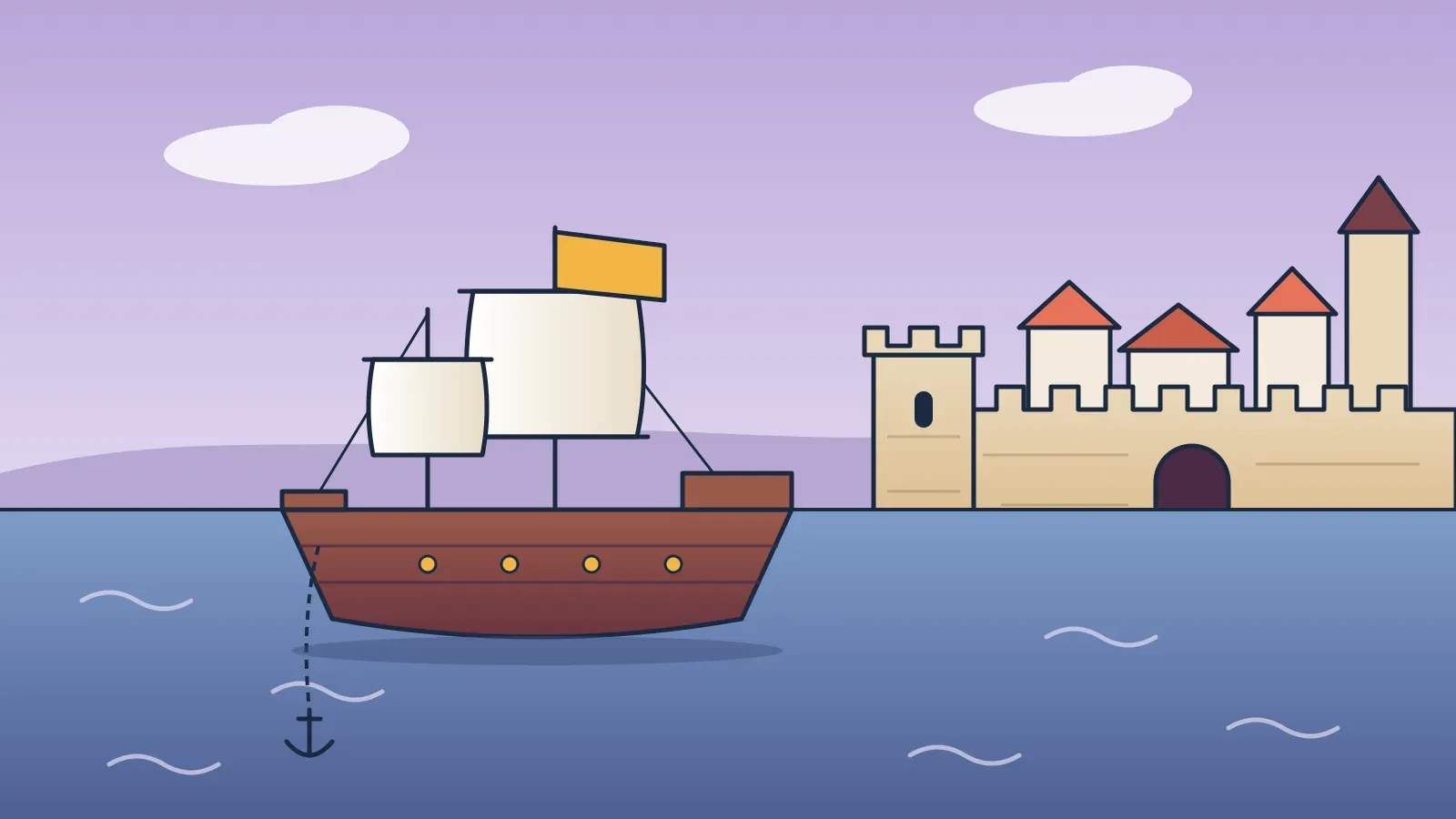
The word quarantine comes from the Italian quarantena, built on quaranta, meaning forty. It refers to the 40 days that ships and travelers arriving from plague-stricken places had to wait before entering Mediterranean ports in the late Middle Ages. Oddly enough, the first rule of this kind called for only 30 days.
Where did the first quarantine happen?
The earliest record historians point to comes from Ragusa, today's Dubrovnik in Croatia, then a merchant republic on the Adriatic Sea. On July 27, 1377, the city's Great Council passed a law whose Latin title ordered that anyone coming from plague-ridden places should not enter Ragusa or its territory.
Croatian historian Gordan Ravančić, who studied the document, calls it the first anti-plague ordinance of its kind in the Western world. Newcomers from affected areas had to stay in isolation for a month before entering the city. That period became known as the trentino, from trenta, Italian for thirty. Anyone who broke the isolation was punished with another 30 days apart.
The logic made sense for the medicine of the time: keep new arrivals separate for a while and wait to see whether the disease appeared. Nobody yet knew that plague was caused by a bacterium, but experience showed that contact with the sick, and with people from affected places, spread it.
Why did 30 days become 40?
Over the following decades, other ports adopted similar measures and the period grew to 40 days, called a quarantino. According to Ravančić, it was Venice, the great trading power of the Adriatic, that extended the isolation from 30 to 40 days. Gensini and colleagues, in a 2004 paper on the history of quarantine, also mention similar laws in Pisa and Marseille in the following century.
Venice built its first lazaretto in 1423, a stone shelter on an island in its lagoon where the sick and the suspected were kept apart. Dubrovnik built its own in 1431, on the island of Supetar. The Venetian system became a model for other European countries, and the Italian name spread with it.
Sources don't tell the story in exactly the same way. Some credit Venice with inventing quarantine in the early 1400s. Studies of Ragusa's archives show that the 30-day rule came first. The most widely accepted version combines both: Ragusa created the measure, and the 40-day period that gave it its name took hold later, with Venice.
Why forty, of all numbers?
The sources don't point to an official reason for the number. What exists are hypotheses, and none has been proven to be the actual basis for the choice:
- A safer margin: 30 days may have seemed too short to stop the disease, and a longer period may simply have worked better. This practical explanation appears in Emerging Infectious Diseases, a journal published by the CDC.
- Medical tradition: according to Gensini and colleagues, Hippocratic teaching from the 5th century BC held that an acute illness showed itself within 40 days.
- Religious symbolism: the number 40 marks biblical episodes such as the Flood and Jesus's fast in the wilderness, and Lent also lasts about 40 days.
More than one of these factors may well have played a part, since medicine and religion were closely intertwined in 14th-century Europe. But that is interpretation: what the records show for certain are the number and the name.
Did quarantine always mean isolation?
Not at first. Merriam-Webster traces the English noun partly to French quarantaine, from quarante, forty, and partly to the Italian quarantena used for ships. The dictionary dates its first known use in English to 1617, and its first listed sense is still simply a period of 40 days.
The verb came much later: Merriam-Webster dates to quarantine, as in to isolate someone or something, to 1801. Since then the word has stretched far beyond ships and plague. People talk about quarantining files on a computer, quarantining plants or animals at a border, or quarantining a rumor before it spreads.
Does a quarantine still last 40 days?
Usually not. The name stuck, but the length is now set according to the disease, and many modern quarantines are much shorter than 40 days. The word came to mean a preventive separation of people who may have been exposed to an infection, whatever its duration.
Venice, incidentally, turns up in other everyday histories, such as how the fork made its way onto European tables. And quarantine joins the list of words and customs with surprising origins, alongside why we say bless you when someone sneezes.
Anyone who talks about going into quarantine is echoing, without realizing it, a number chosen by Adriatic port authorities more than six centuries ago, at a time when waiting 40 days was the best defense anyone knew against the plague.
Sources
- Emerging Infectious Diseases (CDC), via PMC: Etymologia: Quarantine
- Radovi Zavoda za hrvatsku povijest, via Hrčak: Dubrovnik's Invention of the Quarantine and the Transfer of Knowledge about the Spread of Epidemics (Gordan Ravančić, 2021)
- Journal of Infection: The concept of quarantine in history: from plague to SARS (Gensini, Yacoub and Conti, 2004)
- Merriam-Webster: Quarantine Definition & Meaning