What Is 5G and How Is It Different From 4G?
5G is the fifth generation of mobile networks, defined by the ITU as IMT-2020. Here is what changes in speed, latency and frequencies compared with 4G, and what the WHO says about health.
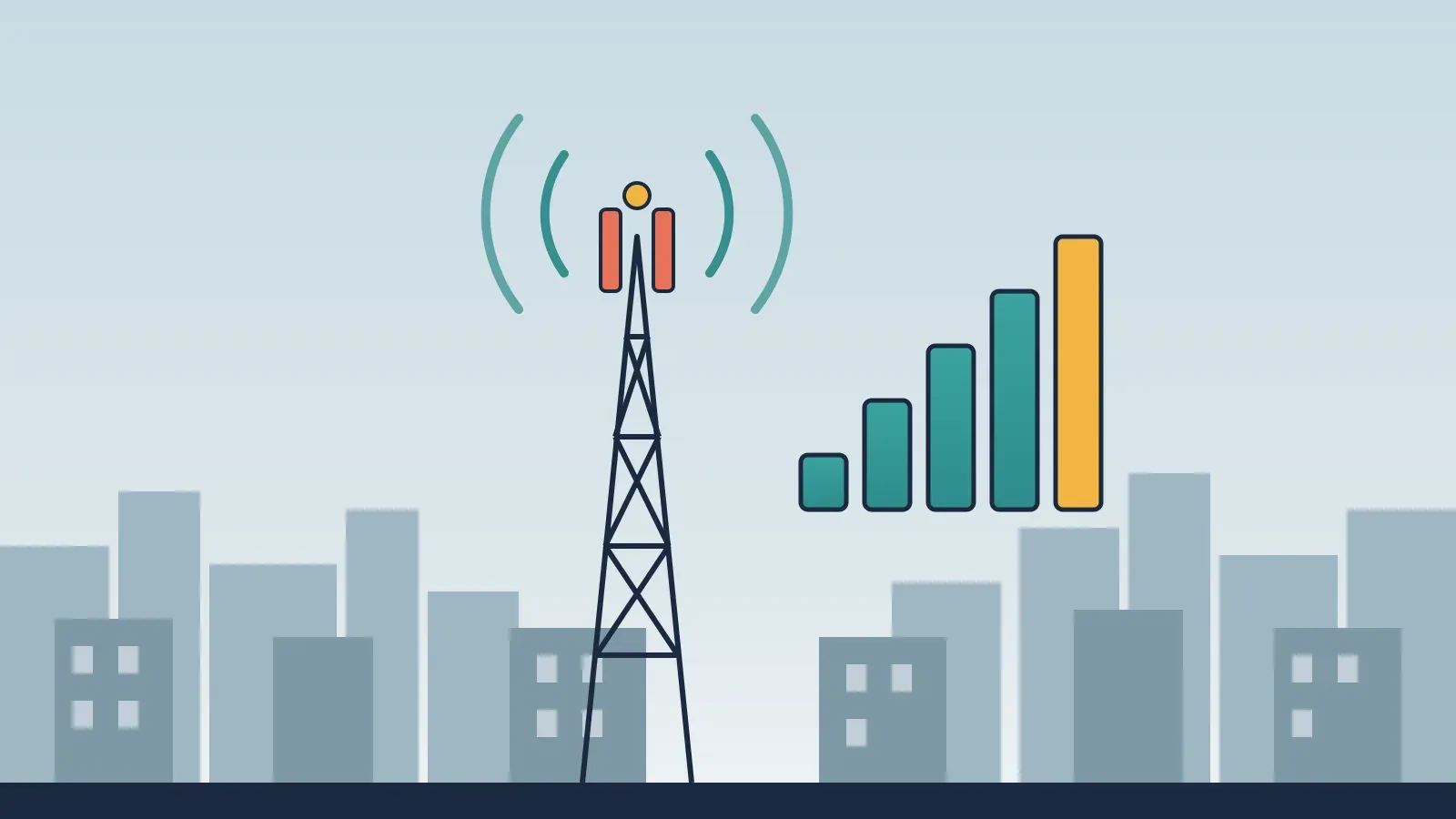
5G is the fifth generation of mobile networks, which the International Telecommunication Union (ITU) calls IMT-2020. Compared with 4G, it was designed to do three things better: move data much faster, respond with far less delay and connect many more devices at once in the same area, partly by using higher radio frequencies.
Where does the idea of generations come from?
Each mobile generation matches a set of international requirements drawn up by the ITU's radiocommunication sector. In the agency's terms, 3G is IMT-2000, 4G is IMT-Advanced and 5G is IMT-2020. The ITU started work on IMT-2020 in 2012, set the performance requirements in 2016 and 2017, and published the detailed radio interface specifications in February 2021, in Recommendation ITU-R M.2150.
So 5G is not a brand or a single technology but a yardstick: any technology that meets the requirements can be recognized as IMT-2020. According to the World Health Organization (WHO), 5G networks were first widely deployed in 2019.
What is 5G supposed to do better than 4G?
The ITU built 5G around three usage scenarios, each with a different priority:
- enhanced mobile broadband: more speed for video, games and downloads;
- ultra-reliable low-latency communications: near-instant responses for uses such as remotely controlling machines;
- massive machine-type communications: huge numbers of sensors and simple devices connected in the same area.
Each scenario comes with minimum targets, presented at an ITU workshop on the IMT-2020 requirements. These are the values a technology must reach in evaluation tests to count as 5G, not the speed any one person will see on a phone. Real-world speed depends on the carrier, the frequency band, how far you are from the antenna and how many people share the network.
| IMT-2020 minimum requirement | Value |
|---|---|
| Peak download rate | 20 Gbit/s |
| Peak upload rate | 10 Gbit/s |
| User-experienced download rate, dense urban | 100 Mbit/s |
| Latency for mobile broadband | 4 milliseconds |
| Latency for ultra-reliable communications | 1 millisecond |
| Connection density | 1 million devices per km² (about 2.6 million per square mile) |
What is latency, and why does it matter?
Latency is the time it takes data to travel between a device and the network. For streaming video, a few extra milliseconds make no difference, because the content can be loaded ahead of time. But when a machine has to react to a command, or in a real-time game, every delay counts. That is why the ITU set aside an entire scenario, with a 1-millisecond target, for communications that need an almost immediate reply.
Which frequencies does 5G use?
According to the WHO, 5G pushes mobile networks into higher frequencies, from around 3.5 GHz up to a few tens of gigahertz. These bands are new to cell networks but were already used for point-to-point radio links and security body scanners. For the fastest broadband, the ITU studied bands between 24.25 and 86 GHz. 5G also relies on more base stations and on antennas that aim the signal at the device being used instead of spraying it in every direction.
Sharing the airwaves always takes planning, since signals in nearby bands can get in each other's way; a familiar household example is why a microwave can slow down your Wi-Fi.
Is 5G bad for your health?
It is an understandable question when a new technology arrives along with new antennas on the street. The WHO's answer is that, after much research, no adverse health effect has been causally linked to exposure to wireless technologies. The organization also acknowledges that only a few studies have looked specifically at 5G frequencies, and says it keeps reviewing the evidence.
The main known effect of radio waves on the body is tissue heating, the same principle a microwave oven uses at far higher power inside a closed box, as explained in how a microwave really heats food. At current exposure levels, the WHO says the temperature rise is negligible. At higher frequencies, energy penetrates less and is absorbed closer to the surface, in the skin and eyes. Around 3.5 GHz, exposure from 5G antennas is similar to that from existing base stations.
Who sets the exposure limits?
Exposure limits in many countries come from the International Commission on Non-Ionizing Radiation Protection (ICNIRP) and the IEEE. They are not tied to any one technology and cover frequencies up to 300 GHz, including those used by 5G. If total exposure stays within those guidelines, the WHO expects no public health consequences.
Research on phones in general points the same way. A review commissioned by the WHO and published in 2024 examined more than 5,000 studies and included 63 in its final analysis; according to Australia's radiation protection agency, it found no association between mobile phone use and head cancers. That review was about phones, not specifically 5G networks, which is why the WHO keeps monitoring new evidence. Notably, among the uses the WHO expects 5G to enable are e-health services such as telemedicine, remote patient monitoring and even remote surgery, the kind of low-latency work the network was designed for.