Why Honey Doesn't Spoil (and When It Actually Can)
Little water, high acidity and a touch of hydrogen peroxide make honey a hostile place for microbes. But it can ferment if it absorbs moisture, and it should not be given to babies under 1 year old.
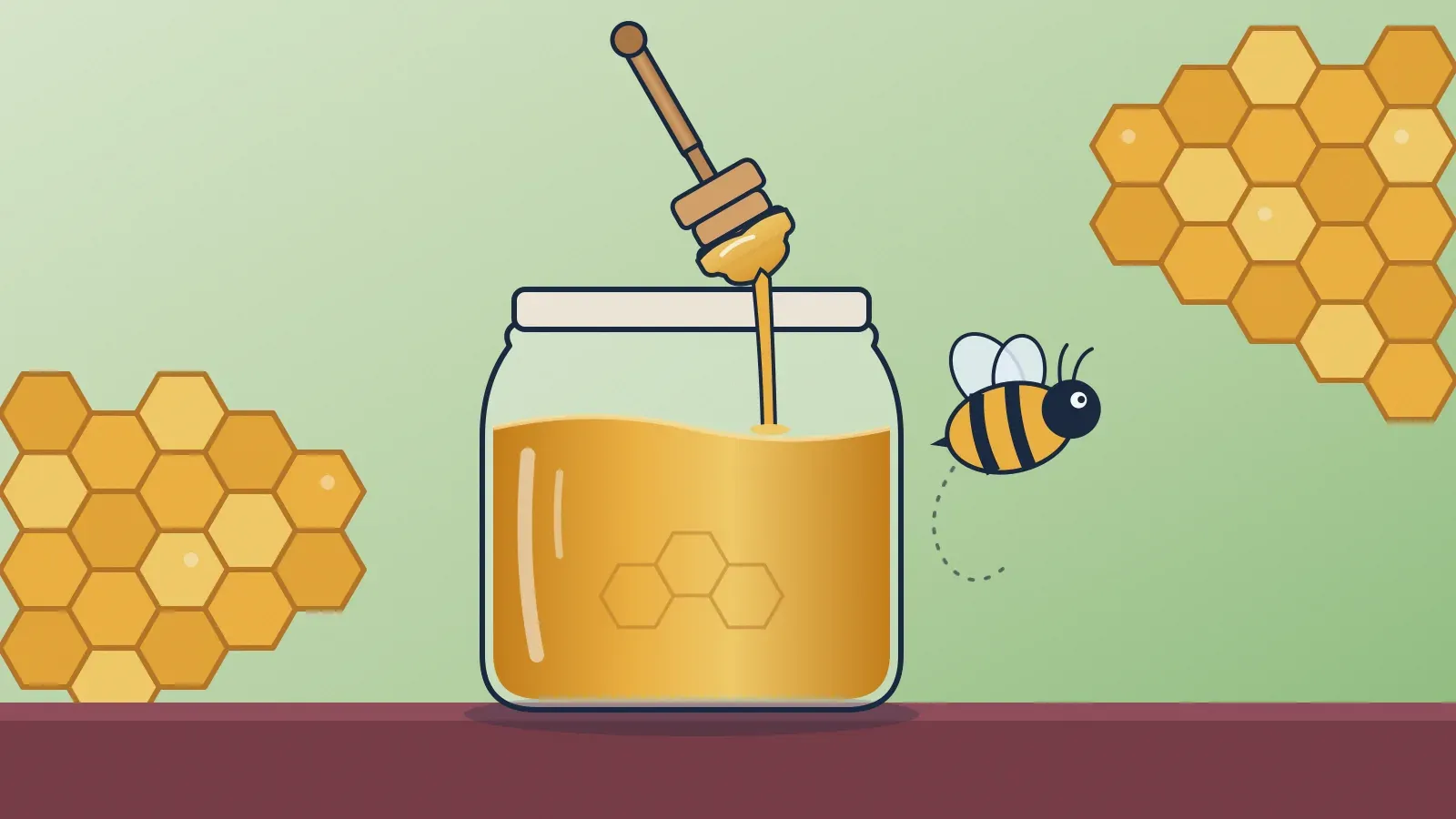
A tightly sealed jar of honey can sit in the pantry for years without spoiling. That is not magic or an industrial preservative: it is chemistry. Honey combines almost everything bacteria and fungi hate. Understanding how it works also tells you when honey stops being so invincible.
Little water, lots of sugar
The nectar bees collect is estimated to be 60% to 80% water. Inside the hive, they dry it out, partly by fanning their wings over it. The result is an extremely concentrated sugar product. The international Codex Alimentarius standard, from the FAO and WHO, caps the moisture content of most honey at 20% (heather honey may reach 23%).
With so little free water, a microbe that lands in honey faces the opposite of what it needs: the sugar draws water out of the cell, which dries out and cannot multiply. It is the same principle that preserves jams and candied fruit.
Acidity and hydrogen peroxide
Honey is also acidic. Its pH sits roughly between 3 and 4.5, a range many bacteria find unfriendly. Part of that acidity comes from an enzyme bees add to nectar, glucose oxidase. It converts glucose into gluconic acid and hydrogen peroxide, the same compound sold as a household antiseptic.
- Low moisture: concentrated sugar pulls water out of microbes.
- Acidity: a pH of roughly 3 to 4.5.
- Hydrogen peroxide: produced in small amounts by the bees' glucose oxidase.
- A sealed container: keeps honey from absorbing moisture from the air.
Honey from Egyptian tombs: fact or legend?
You often read that archaeologists found 3,000-year-old honey in Egyptian tombs and that it was still edible. The true part is that Egyptians used honey and placed it in burial settings; museums catalog tomb vessels whose contents are described as possibly honey. The rest of the story is shaky.
A review in the American Bee Journal traced the legend to a 1913 account based on letters from Egyptologist Arthur Weigall, who described a jar of honey that was still liquid, with no chemical test or tasting on record. Two jars from Tutankhamun's tomb labeled as honey of good quality were nearly empty, and the residue could not be confirmed as honey. One sample authenticated by pollen analysis, dating to around 1350 BC, had turned into a dark brown mass. As far as is known, there is no reliable record of anyone tasting tomb honey and confirming it was fit to eat.
When honey can go wrong
Honey's weak spot is water. Because it is hygroscopic, it absorbs moisture from the air when left open or poorly sealed, and naturally present yeasts can start to ferment it. Beekeeping references say that below about 17% moisture fermentation does not occur; at around 18% it is unlikely; above 19% the risk is serious. Fermented honey usually turns foamy and smells sour or boozy, and should be thrown out.
Crystallizing, on the other hand, is not spoiling. Crystallized honey is still good; just warm it gently in a water bath if you prefer it runny. To store it well, keep the lid tight, keep it somewhere dry and use clean, dry spoons.
No honey for babies under 1
Lasting a long time does not mean being sterile. Honey can contain dormant spores of the bacterium Clostridium botulinum, which live in soil, dust and air. In adults and older children, a mature digestive system keeps these spores from taking hold. In a baby's immature gut, however, they can germinate and produce toxin, causing infant botulism, a rare but serious illness. That is why the CDC and the American Academy of Pediatrics advise against giving honey to children younger than 12 months, whether mixed into food or a bottle or put on a pacifier.
In short, honey lasts because it combines little water, acidity and hydrogen peroxide. Keep it tightly closed and it should keep for a very long time; let moisture in and it can ferment. And however natural it is, honey belongs on a child's menu only after their first birthday.