Fingerprints: How They Form in the Womb and Why No Two Are Alike
Fingerprints are set before birth, and not even identical twins share them. Here is how the ridges form and what makes each pattern unique.
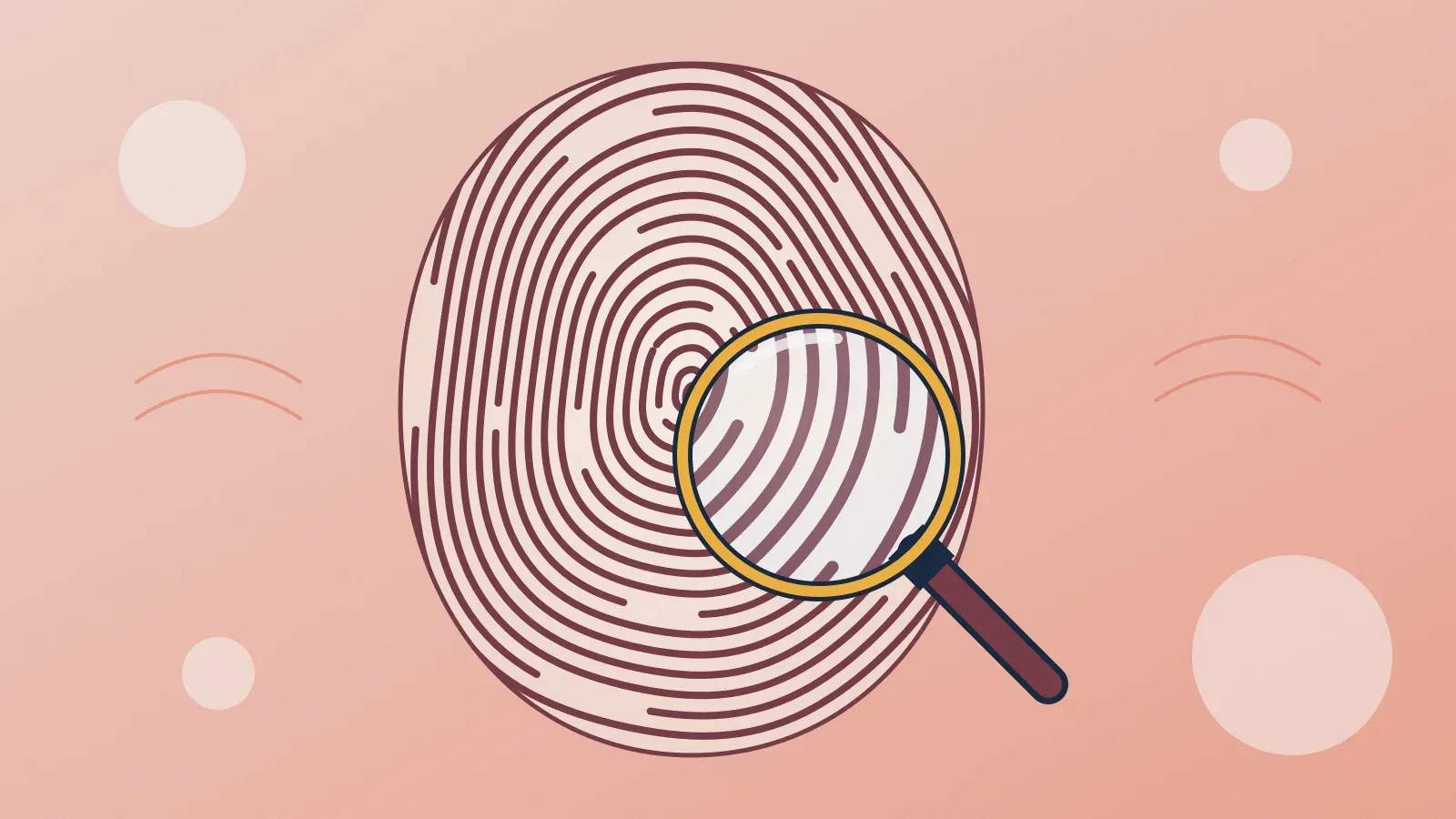
Your fingerprints were finished before you were born, and not even an identical twin would share them. The tiny ridges on your fingertips form in the womb during the first half of pregnancy and stay with you for life. Understanding how that happens explains why even people with the same DNA leave different prints.
How fingerprints form in the womb
Around the 10th week of pregnancy, a fetus has small raised pads on its fingertips, palms and soles, called volar pads. From then on, they stop growing and are gradually absorbed as the hand develops. This is the period when the skin ridges that make up fingerprints begin to appear.
The exact timing varies slightly between sources. Ridges are generally described as starting to form from about 10 weeks, with the pattern set by around week 17, roughly halfway through pregnancy. Some references place pattern formation between weeks 13 and 19.
A study published in 2023 in the journal Cell, involving researchers from the University of Edinburgh, helped clarify the mechanism. Ridges emerge as waves that spread out from a few starting points on the fingertip. Three signaling molecules, called WNT, EDAR and BMP, interact in a kind of pattern described mathematically by Alan Turing in the 1950s, known as a reaction-diffusion system. Where these waves start and how they meet determines the final design.
Arches, loops and whorls
The overall shape of a fingerprint is linked to the size of the volar pad when the ridges start to appear. The most widely accepted explanation sums it up like this:
| Pattern | What it looks like | Volar pad when ridges form |
|---|---|---|
| Whorl | Circles or spirals around a center | Still prominent |
| Loop | Lines that enter from one side, curve and exit the same side | Moderately prominent |
| Arch | Lines that run across the finger in a wave | Almost flat |
Because the timing of pad regression is influenced by genes, pattern types tend to run in families. But pattern type alone cannot identify anyone.
What makes each fingerprint unique
Identification relies on fine details called minutiae: points where a ridge ends, splits in two or merges with another. These details are not inherited. They come from the interaction between genes and the environment inside the womb, shaped by factors such as:
- How fast the skin layers and fingers grow.
- The shape and size of blood vessels in the area.
- The fetus's position in the womb and contact with amniotic fluid.
- Differences in nutrition, blood pressure and umbilical cord length.
Small variations in these factors change where the ridge waves start, the angle at which they advance and how they meet. The result is an arrangement that, in practice, never repeats, not even across the ten fingers of the same person.
What about identical twins?
Identical twins come from the same fertilized egg and share virtually the same DNA. That is why their fingerprints are often very similar in overall pattern, with similar types of loops, whorls and arches. Even so, the minutiae are different. Each twin occupies its own position in the womb, gets slightly different blood flow and grows at its own pace, and that is enough for the ridges to organize differently. An examiner can tell the prints of two identical twins apart.
There is also a rare genetic condition, adermatoglyphia, in which people are born without ridges on their fingertips, palms and soles. It is linked to changes in the SMARCAD1 gene and has been identified in only a few families worldwide, which shows that while the details are random, the ability to form ridges depends on genes.
In short, fingerprints are a snapshot of a few months of life in the womb: genes provide the outline, and the chance events of the environment fill in the details. That combination is what makes every fingerprint unique and explains why even identical twins can be told apart by their fingertips.