Why Do We Say Hello When We Answer the Phone? Edison's Hello Beat Bell's Ahoy
We answer the phone with hello because Thomas Edison recommended it in 1877 as a way to get attention on the line. Alexander Graham Bell preferred ahoy, but hello won and spread to other languages.
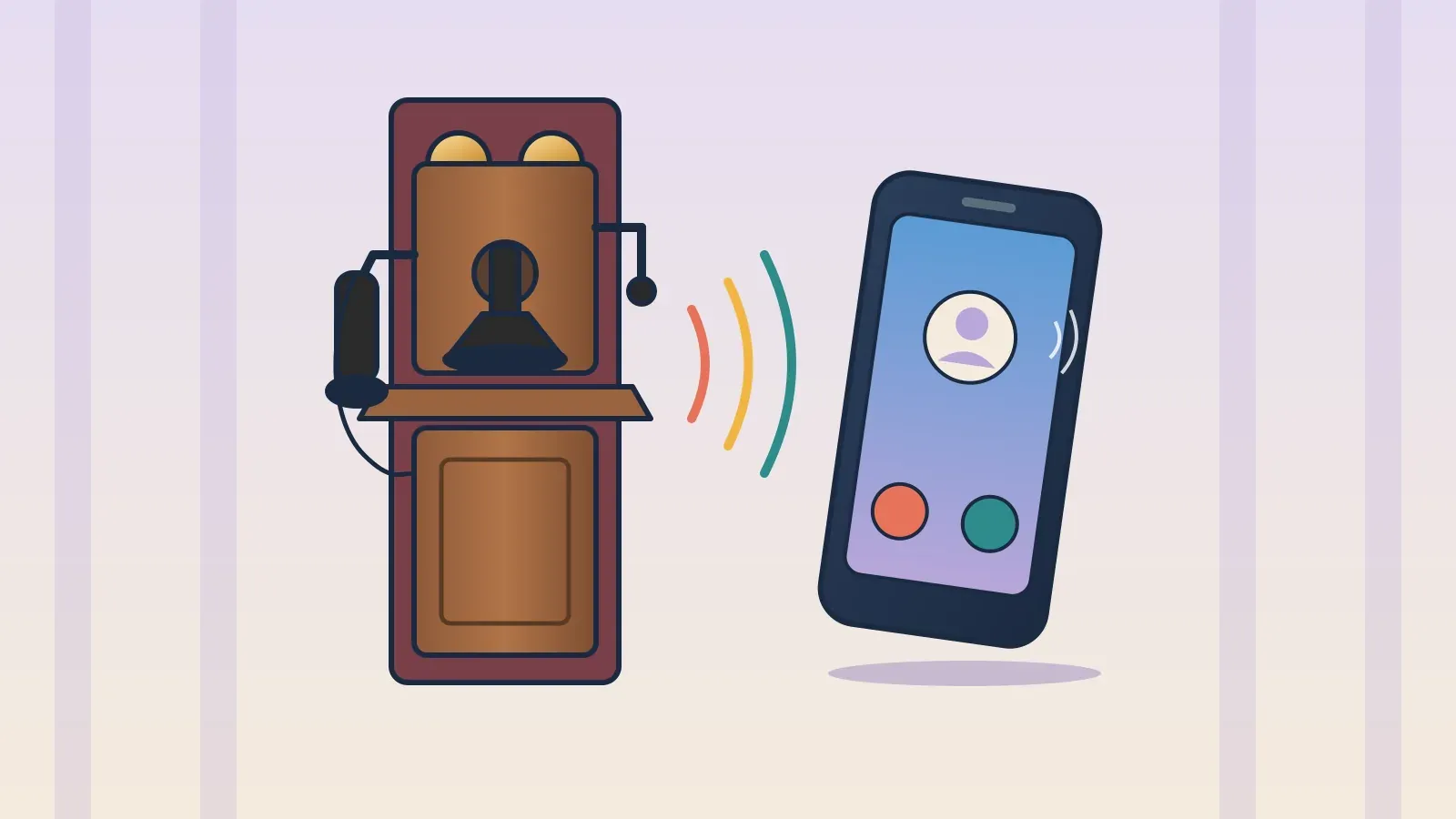
We answer the phone with hello largely because of Thomas Edison. In 1877 he recommended the word as a way to get the attention of whoever was on the other end of the line. Alexander Graham Bell preferred ahoy, the sailor's call. Edison's choice won, and other languages borrowed it as allô, aló and alô.
Why did early phones need a calling word?
In the telephone's first years, there was no agreed way to start a conversation. A line could sit open, and someone had to signal the person at the other end that a call was coming. The open question was whether that required a bell or whether a voice would do. Both of the best-known inventors of the era had an opinion, and they did not agree.
Edison thought a voice was enough. On August 15, 1877, he wrote to a correspondent, T. B. A. David, that they would not need a call bell, since Hello! could be heard 10 to 20 feet away. The letter is quoted by linguist David Wilton on his site Wordorigins.
Three days later, on August 18, 1877, the Pittsburgh Evening Chronicle reported the word in use on a telephone line in Pittsburgh: someone had called Hello into one of the boxes. It is one of the earliest known records of hello on the phone.
Did Bell really want us to say ahoy?
Yes, according to several sources. Bell favored ahoy, the interjection sailors used to hail another ship. Polish scholar Andrzej Zieliński, in a 2022 paper on Spanish telephone formulas, notes that Bell proposed answering with ahoi, ahoi, and that Edison suggested hello instead. In a report for NPR, Brooklyn College professor Allen Koenigsberg also mentions Bell's preference for ahoy.
No document shows an official decision between the two words. What is known is that hello spread with the first American telephone networks, while ahoy stayed at sea.
Did Edison invent the word hello?
No, and this is where the popular story tends to overreach. The NPR report goes as far as saying hello was invented for the telephone, but the word is older. Wilton found hello used to get someone's attention in a Connecticut newspaper, the Norwich Courier, in 1826, and as a greeting in the New York Clipper in 1853. Merriam-Webster dates the first known use of the noun to 1834 and explains that hello is an alteration of hollo, an old shout used to call someone. Wilton traces the family further back still: a cry spelled holla or hola, meaning stop, appears in an English translation of Froissart's chronicles published in 1523.
In other words, Edison didn't coin the word: he picked it and recommended it for a new device. It was the telephone that turned a fairly uncommon shout into the most common greeting in English.
Where do other languages' versions come from?
As phones spread, hello traveled with them. Zieliński lists hello as an adapted borrowing in many languages: French allô, Russian allo, Swedish hallå, Turkish alo, and aló in much of Spanish-speaking America. Brazilian Portuguese uses alô, which fits the same family, though we did not find a study tracing its exact route.
In Spanish, Zieliński's earliest dated examples of aló come from Peruvian writing of roughly 1908 to 1930 and from a 1931 text by the Guatemalan writer Miguel Ángel Asturias. Merriam-Webster still lists answering the telephone as one of the core uses of hello in English.
How do people answer the phone in Spanish?
Not everyone followed hello. The Royal Spanish Academy lists the formulas used across the Spanish-speaking world in its grammar, nearly always said as a question:
| Formula | Where it is used, per the Royal Spanish Academy |
|---|---|
| ¿Aló? | Venezuela, Chile, Ecuador, Peru, Paraguay and some Central American countries |
| ¿Bueno? | Mexico and some Central American countries |
| ¿Hola? | Argentina and Uruguay |
| ¿Diga? or ¿Dígame? | Spain (diga also in Chile) |
| ¿A ver? | Colombia |
In Spain, according to Zieliński, diga grew out of the pair oiga and diga, used to confirm that the connection worked. Hola, meanwhile, carried a social stigma when telephones spread there, so it never caught on as a way to answer.
Why do we still say hello?
Edison's argument was that a spoken word could replace the call bell. Today phones ring, buzz and show the caller's name, and we still say hello. Like the QWERTY layout that outlived the typewriter and OK, another 19th-century American invention, it is a habit that stayed long after its original reason disappeared.