How to steam-clean your microwave with lemon or vinegar
A bowl of water in the microwave softens stuck-on grime and makes cleaning easy. Here is the step-by-step, the risk of superheated water and what never to use on the appliance.
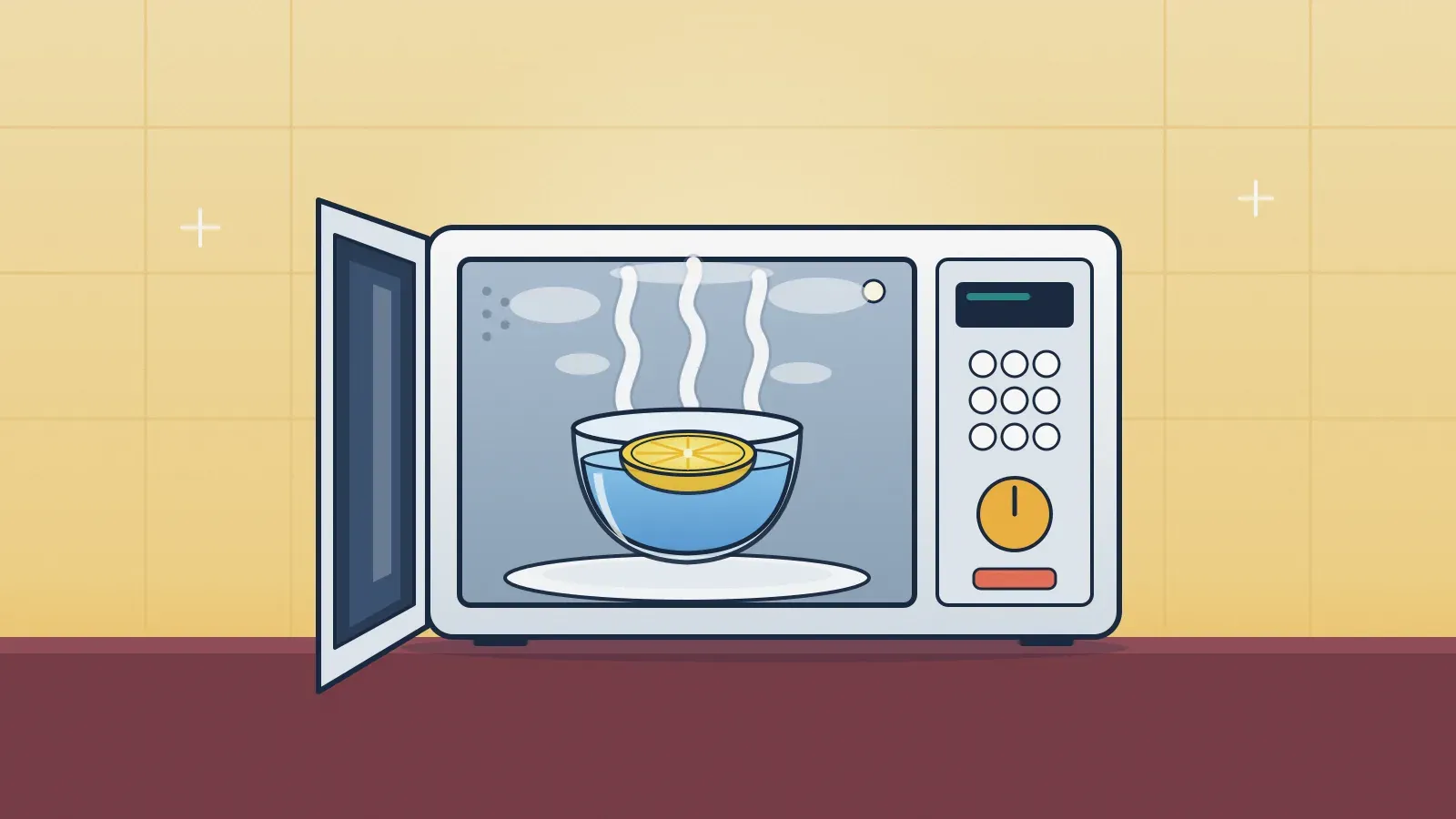
Sauce splatters, dried grease and the smell of popcorn from three days ago: a microwave gets dirty fast, and because the grime cooks a little more with every use, it sticks harder and harder. The simplest fix needs no harsh products and no hard scrubbing. All it takes is a bowl of water, a little lemon or vinegar and a few minutes of steam.
Why steam works
When water boils inside the closed appliance, the steam spreads and condenses on the walls, the ceiling and the door. That hot moisture rehydrates the dried-on residue, which then wipes away with a damp cloth. Manufacturer manuals describe exactly this principle: steam softens the soil so it can be removed with little effort. Lemon and vinegar mainly add a fresh scent and help mask odors; the steam does the heavy lifting.
Step by step
- Choose a microwave-safe bowl or measuring jug, made of glass or ceramic with no metallic trim.
- Add about 1 to 2 cups (250 to 500 ml) of water plus the juice of half a lemon (you can drop the rind in too) or a splash of vinegar.
- Heat on high for a few minutes, until the water boils and the door window fogs up.
- Keep the door closed for a few more minutes so the steam can work.
- Open carefully, remove the bowl with oven mitts and wipe the ceiling, walls, floor and door with a damp cloth or soft sponge.
- For stubborn spots, repeat the process instead of scraping.
Timing depends on the oven's power and the amount of water, and sources do not agree: some guidance simply says a few minutes, while one major manufacturer's manual suggests running a large container of water for 10 minutes for stubborn soil. Start short, keep an eye on it and check the manual for your model.
Watch out for superheated water
There is a little-known hazard. The U.S. Food and Drug Administration (FDA) warns that water heated in a microwave in a smooth, clean container can become superheated: hotter than its boiling point without showing any bubbles. A small disturbance, such as moving the bowl, can make it erupt suddenly, and there are reports of serious burns to the hands and face. The FDA notes that adding something to the water before heating, such as sugar or instant coffee, greatly reduces the risk, and it advises following the heating times in the manual.
When cleaning, the lemon pieces also help bubbles form, but they are no guarantee. So do not overdo the time, wait a minute or two before opening the door, keep your face away from the escaping steam and use oven mitts to lift out the bowl, which will be very hot.
The turntable and the door
Take the chance to clean the turntable. Let it cool before putting it in water, because a sudden temperature change can crack it, then wash it in warm, soapy water; many manufacturers say it can also go in the dishwasher. Clean the roller support underneath and put everything back before using the oven again, since several manuals say it should not run without the tray. On the door and the edges that meet the cabinet when it closes, use only a soft cloth and mild detergent: a clean seal helps the door close properly.
What to avoid
- Steel wool and abrasive scouring pads: they scratch the interior and the door, and manufacturer manuals advise against them.
- Abrasive powders and conventional oven cleaners, which can damage the interior coating.
- Containers with metal or gold or silver trim, which can spark.
- Running the microwave empty, with nothing to absorb the energy.
- Mixing vinegar or lemon with bleach or any other cleaning product.
In short: water, a touch of lemon or vinegar, a few minutes of steam and a soft cloth take care of most of the mess. Be careful when opening the door and lifting out the bowl, and clean often: fresh splatters come off far more easily than grime that has been cooking for weeks.