How to tell if an egg is fresh (and what the float test can't tell you)
The float test reveals an egg's age thanks to its air cell, but not whether it is safe. Here is how to read the test, the date and the smell, and why storage advice changes from country to country.
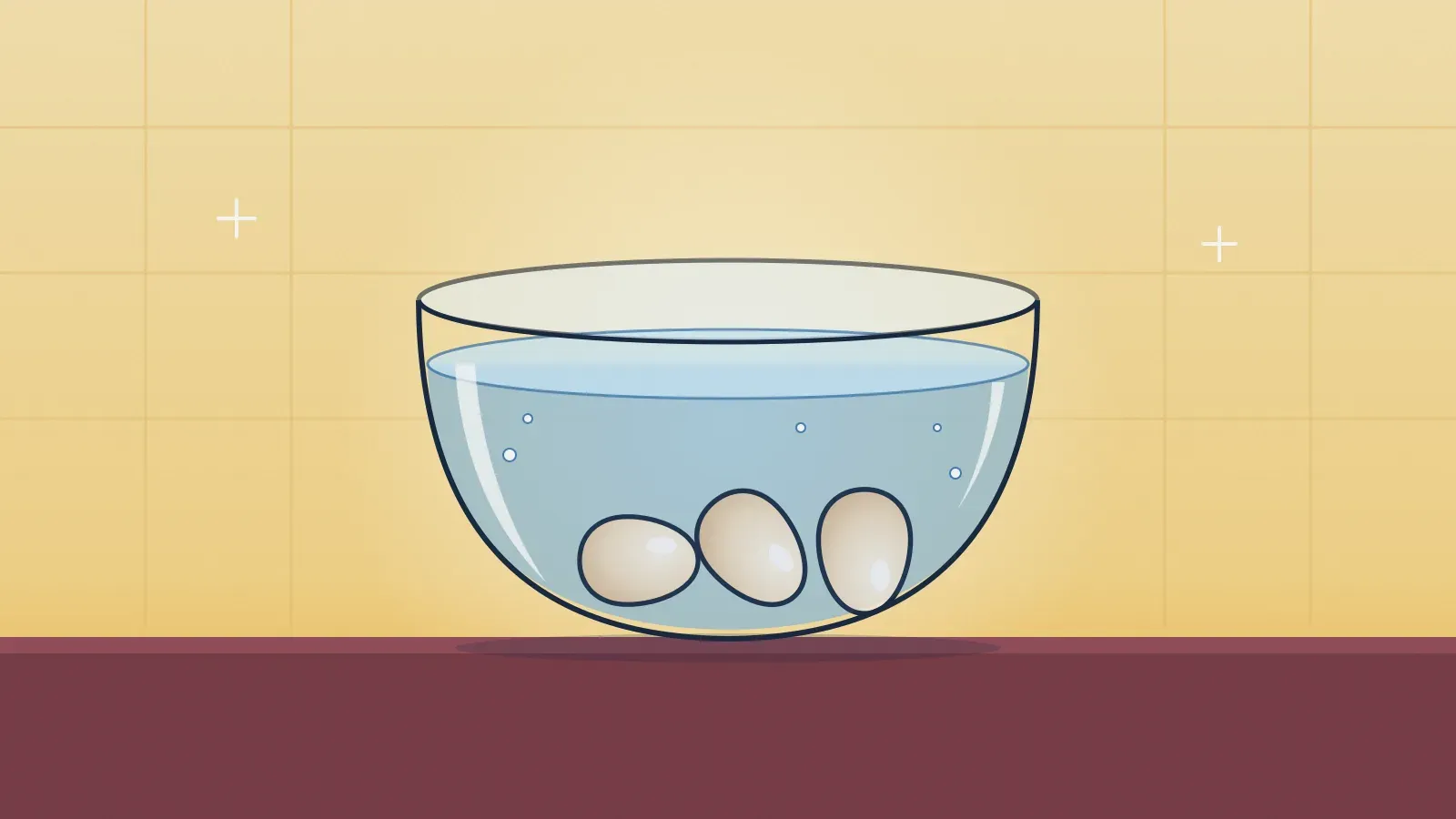
Nobody remembers when the egg carton was bought? An old home test estimates an egg's age: put it in water. It works for a simple physical reason, but it has an important limit.
The float test, step by step
Fill a bowl or a tall glass with cold water and gently lower the egg in. The position it settles in is a clue to its age:
- Sinks and lies flat on its side at the bottom: the egg is fresh.
- Sinks but tilts, with the wide end pointing up: it has been around a while but is still good for cooking.
- Stands on end at the bottom: it is older; use it soon, preferably in well-cooked dishes.
- Floats: it is old. That does not automatically mean it has gone bad, but it needs checking before use.
The in-between positions are a popular rule of thumb. What the official guidance from the U.S. Department of Agriculture (USDA) says is more direct: an egg that floats is an old egg, but it may still be safe.
Why it works: the air cell
Shortly after being laid, an egg cools and its contents contract a little. According to the USDA, this forms a small pocket of air, usually at the wide end. The shell looks solid but has thousands of tiny pores. Over the days, moisture and carbon dioxide escape through them and are replaced by air, so the cell grows. The bigger the pocket, the lower the egg's density. First the wide end starts to rise, then the egg stands on end and finally it floats. So the test measures water loss over time, which is to say age.
What the test can't tell you
Age and safety are different things. The U.S. Food and Drug Administration (FDA) points out that even eggs with clean, uncracked shells can contain Salmonella bacteria. A perfectly fresh egg that sinks flat can still be contaminated, and the test cannot detect that. This is why authorities recommend cooking eggs until both the yolk and the white are firm. In the other direction, an egg that floats is not necessarily spoiled: the USDA suggests cracking it into a separate bowl and checking its smell and appearance before deciding.
Smell, cracks and the date on the carton
The most reliable test for a spoiled egg is your nose. A bad egg has an unmistakable unpleasant smell, raw or cooked; if there is any odd odor or unusual appearance, throw it away. As for cracks, the USDA says never to buy cracked eggs. If an egg cracks on the way home, break it into a clean container, cover it, refrigerate it and use it within two days.
The printed date varies by country. In the United States, cartons with the USDA grade shield carry the pack date as a three-digit code, from 001 for January 1 to 365 for December 31, and a sell-by date can be no more than 45 days after it. The USDA says raw eggs in the shell keep for 3 to 5 weeks in the fridge, while the FDA advises using them within 3 weeks for best quality. In the European Union, the best-before date is set at no more than 28 days after laying.
Fridge or cupboard? It depends on the country
| Where | Are eggs washed? | Storage guidance |
|---|---|---|
| United States | Yes, USDA-graded eggs are washed and sanitized | Refrigerator, at 40 °F (4 °C) or below, in the original carton |
| European Union | No, Class A eggs must not be washed | Constant temperature; generally not refrigerated before sale |
| Scotland (UK) | Follows the retained EU rule | A cool, dry place, ideally the fridge |
The difference has a logic to it. EU rules forbid washing Class A eggs so as not to damage the cuticle, the natural film that helps protect the shell, and discourage refrigerating them before sale because a cold egg left at room temperature can gather condensation on its surface, which encourages bacteria. The USDA makes the same argument from the other side: once an egg has been refrigerated it should stay refrigerated, and not sit out for more than two hours. If you refrigerate them, use the original carton and the coldest part, not the door, and follow your country's food safety authority.
In short: the float test estimates age, not safety. Combine it with the smell, the date and an intact shell, keep eggs at a steady temperature and cook them thoroughly. When in doubt, throw it out.