The Shortest War in History: Britain vs. Zanzibar, 1896
On August 27, 1896, the Royal Navy shelled the Sultan of Zanzibar's palace and ended the conflict in under an hour. Here is why the war started, how long it really lasted and what changed afterward.
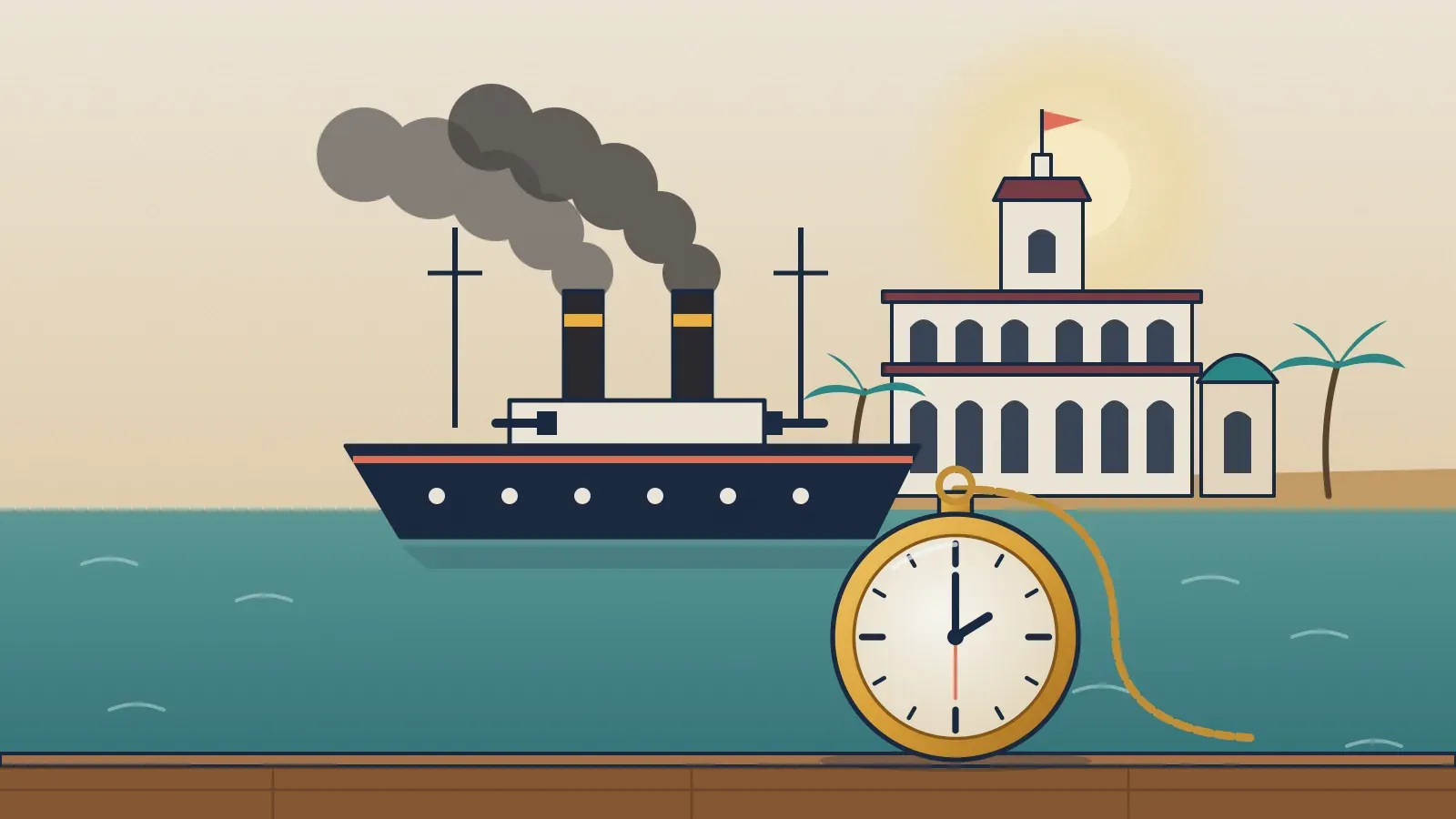
Some wars last decades. The Anglo-Zanzibar War was shorter than a TV episode. On the morning of August 27, 1896, Royal Navy ships opened fire on the Sultan of Zanzibar's palace, and less than an hour later the palace flag had come down and the fighting was over. It is regarded as the shortest war on record, but the exact number of minutes depends on who is counting and when the clock starts.
The backdrop: a sultanate under British protection
Zanzibar, an archipelago off the coast of East Africa, was a major 19th-century trading hub ruled by sultans of Omani descent. In 1890, Britain and Germany carved up their spheres of influence in the region through the Heligoland-Zanzibar Treaty, and that same year Zanzibar became a British protectorate. Under the agreement, a new sultan could only take the throne with the approval of the British consul.
The trigger: a sultan's death
On August 25, 1896, the pro-British sultan Hamad bin Thuwaini died suddenly. Within hours, his nephew Khalid bin Barghash occupied the palace and declared himself sultan without the required approval. The British preferred another candidate, Hamoud bin Muhammed, who was friendlier to their interests.
British consul Basil Cave and Rear Admiral Harry Rawson demanded that Khalid step down. He refused and gathered a force of about 3,000 men in the palace, including guards, servants and enslaved people, along with some artillery and the armed yacht Glasgow. Rawson assembled five warships in the harbor and issued an ultimatum: Khalid had until 9:00 a.m. on August 27 to lower his flag and leave the palace.
Minute by minute: the morning of August 27
| Time (local) | Event |
|---|---|
| 9:00 a.m. | The ultimatum expires with no surrender |
| 9:02 a.m. | British ships open fire on the palace |
| A few minutes later | The yacht Glasgow returns fire and is sunk; its crew is rescued |
| Around 9:40 a.m. | The palace flag is shot down and firing stops |
| That afternoon | Hamoud bin Muhammed is proclaimed sultan |
On the Zanzibari side, about 500 people were killed or wounded, most of them by the fire that engulfed the palace. On the British side, there was a single serious casualty, a petty officer aboard one of the ships.
So how long was it: 38, 40 or 45 minutes?
Sources disagree, and the difference comes down to the starting point. Counting from the first shot at 9:02 to the ceasefire at around 9:40 gives 38 minutes, the figure that became famous. Counting from the end of the ultimatum at 9:00 gives 40 minutes. Other sources, including Encyclopaedia Britannica, say no longer than 45 minutes. In every version, the war lasted less than an hour.
What happened next
- Khalid escaped during the bombardment and took refuge in the German consulate with about 40 followers; Germany refused to extradite him and took him to German East Africa.
- The British captured him in 1916, during World War I; he died in Mombasa, Kenya, in 1927.
- The British required Khalid's supporters to pay 300,000 rupees to cover the cost of the shelling and the looting.
- Hamoud bin Muhammed ruled with reduced powers, and British influence over Zanzibar deepened.
The Anglo-Zanzibar War is often remembered as a quirky footnote, but it neatly sums up the logic of late 19th-century imperialism: a power with overwhelming military superiority deciding who would rule a territory that formally still had its own sovereign. The record-setting 38 minutes cost hundreds of lives, a reminder that even in the shortest war in history, the imbalance of power had very real consequences.