How to Keep Bread Fresh Longer (and Why the Fridge Makes It Worse)
The fridge makes bread go stale faster, while the freezer is your best ally. Learn where to store it, how to freeze it in slices, how to reheat it and when to throw it out.
Putting bread in the fridge feels like the safe choice, but that is exactly where it goes stale fastest. Bread ages through a chemical change in its starch that moderate fridge cold speeds up and freezer cold almost stops. Once you understand that, the way you buy, store and use every slice changes.
Why the fridge turns bread hard
Stale bread is not simply dry bread. During baking, the starch in the flour absorbs water and loses its orderly structure. Once the loaf cools, the starch molecules, mainly amylopectin, slowly reorganize into crystalline structures and squeeze out some of that water. This is called starch retrogradation, and it is what makes the crumb firm, crumbly and bland.
Retrogradation happens faster at refrigerator temperatures, roughly 0 to 10 °C (32 to 50 °F), than at room temperature. In the freezer, molecular movement slows so much that the process practically stops. So the rule is simple: either keep bread out of the fridge and eat it within a few days, or put it straight into the freezer.
Where to store each kind of bread
| Location | Good for | Watch out for |
|---|---|---|
| Room temperature (cool, dry, dark spot) | Bread you will eat within 1 to 3 days | Keep the bag closed; crusty loaves do better in a paper or cloth bag, not an airtight container |
| Refrigerator | Almost never; only in extreme heat and humidity, when mold is the bigger risk | It stales faster; take it out about an hour before eating or warm it up |
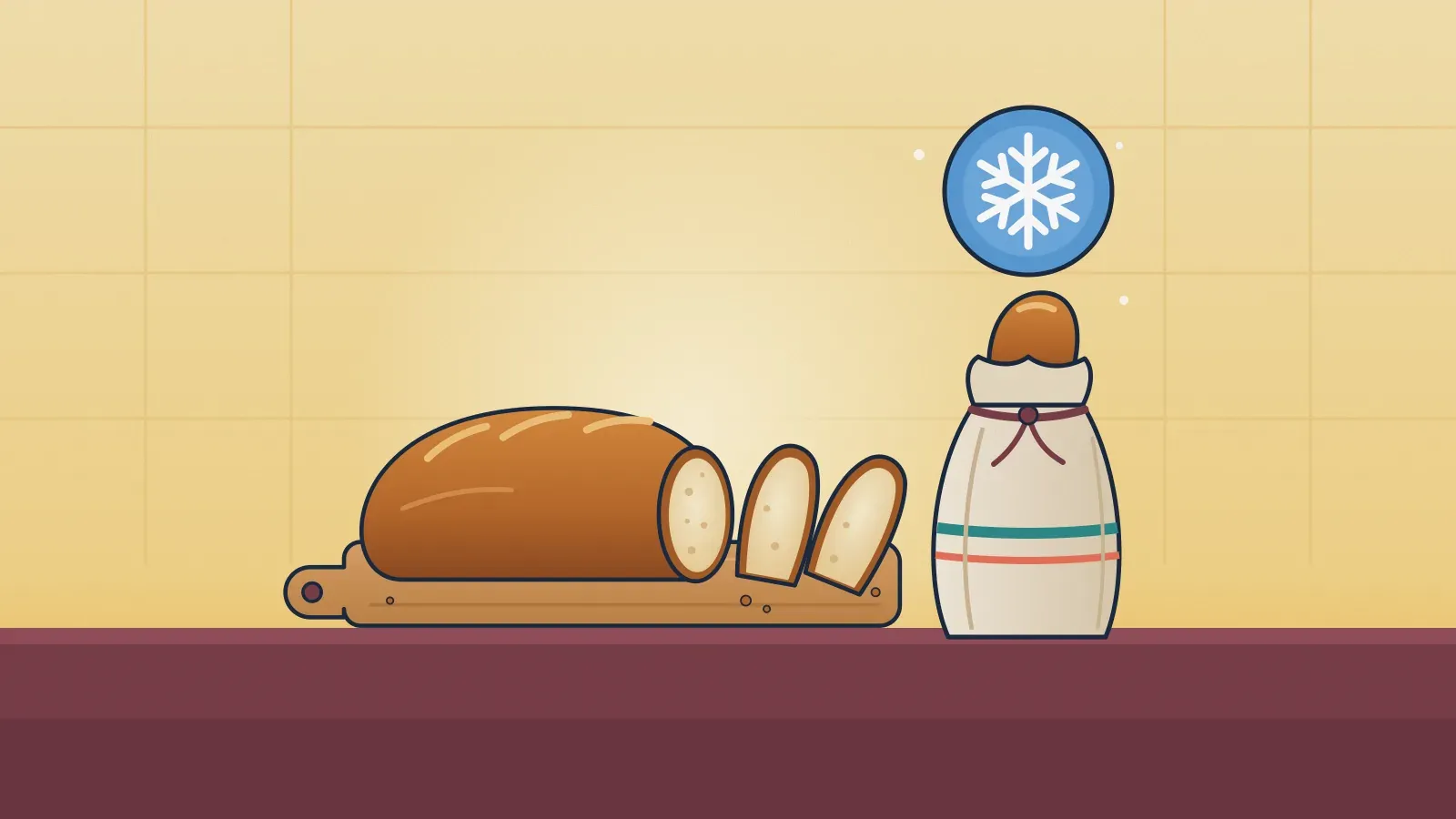
| Freezer | Bread you will not eat soon | Wrap well with no air; quality holds for up to about three months |
Packaged sandwich bread usually lasts longer at room temperature because it contains preservatives and comes in a plastic bag. Bakery and sourdough loaves dry out faster, but their thick crust protects the crumb. A practical tip: after cutting a whole loaf, rest it cut side down on the board to reduce moisture loss.
How to freeze bread in slices
- Freeze the bread as early as possible, ideally on the day you buy it, when it is at its freshest.
- If it is homemade, let it cool completely so ice crystals do not form inside the bag.
- Slice it before freezing so you can take out only what you need.
- Place it in a freezer bag or wrap it tightly in plastic wrap, pressing out as much air as possible. Avoid perforated bags.
- Label it with the date and use it within about three months for best quality.
- To use, put slices straight into the toaster or let them thaw inside the bag so they do not dry out.
How to reheat and revive bread
Heat temporarily reverses retrogradation: the starch crystals melt and the crumb softens again. The effect is short-lived, because the bread hardens again as it cools, so only reheat what you are about to eat.
- Crusty rolls and baguettes: mist the crust with a little water and bake in a preheated oven at medium heat for 5 to 10 minutes.
- A whole thawed loaf: wrap it in foil, warm it in the oven and remove the foil for the last few minutes to crisp the crust.
- Slices: the toaster is the fastest option, even straight from the freezer.
- Microwave: softens bread in seconds, but it turns hard very quickly afterward; use it only for bread you will eat right away.
When to throw it out: mold
Stale bread is still safe and can become toast, breadcrumbs or bread pudding. Moldy bread cannot. The U.S. Department of Agriculture (USDA) advises discarding moldy bread and baked goods because they are porous: the mold's threads can spread deep inside, well beyond the visible spot. Cutting off the green part does not solve the problem.
Do not sniff moldy bread up close, to avoid inhaling spores, and wrap it before throwing it away. Clean the bread box or cupboard where it was kept, since spores can contaminate the next loaf. If only one slice shows mold, the safest choice is to discard the whole bag, because mold may already be present on neighboring slices without being visible.
In short: buy what you will eat in two or three days, keep it out of the fridge in a cool, dry place, freeze the rest in slices as soon as you can, and use the oven or toaster to bring back the softness. With these habits you waste less and enjoy bread that tastes fresh for much longer.