Where the Sandwich Comes From: The Earl of Sandwich, Fact and Legend
The sandwich is named after John Montagu, 4th Earl of Sandwich, but the famous tale that he invented it at a gambling table has never been proven. Here is what the sources actually say.
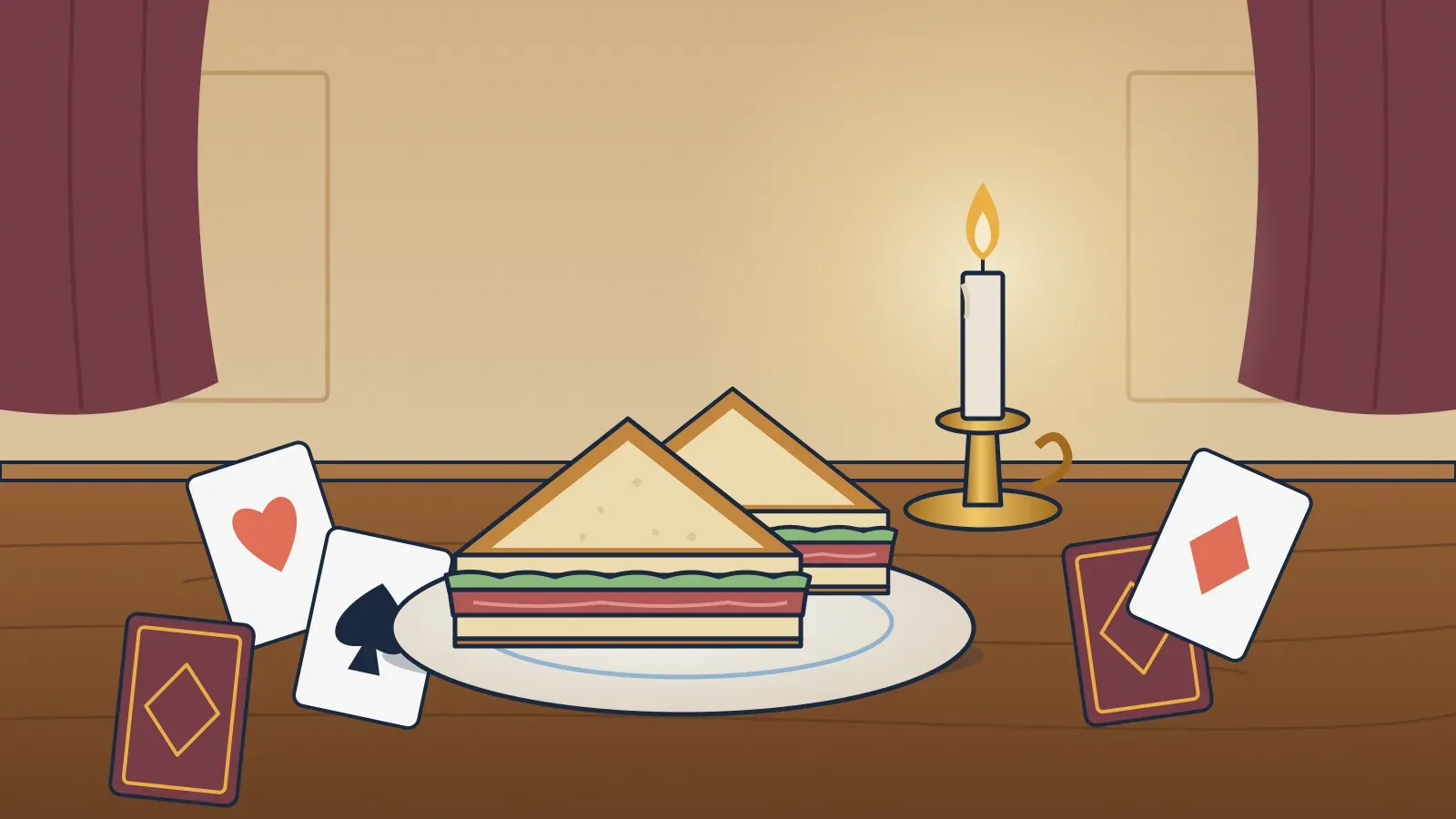
Almost everyone has heard the story: an English aristocrat hooked on gambling refused to leave the card table even to eat and asked for meat between two slices of bread. And so the sandwich was born. The name really does come from a nobleman, John Montagu, 4th Earl of Sandwich. But the gambling part is far shakier than it sounds, and the idea of putting food between bread is much older than he is.
Who the Earl of Sandwich was
John Montagu was born on November 13, 1718, and died in London on April 30, 1792. He had a long and controversial political career: he served as First Lord of the Admiralty, the political head of the Royal Navy, in 1748 to 1751 and again from 1771 to 1782, a period that included the American Revolutionary War. He was also a secretary of state and postmaster general.
His interest in naval affairs and exploration earned him another namesake: in 1778, Captain James Cook named the islands we now call Hawaii the Sandwich Islands.
The gambling-table legend and where it came from
The popular version has an identifiable source: Londres, a book by the French writer Pierre-Jean Grosley, published in 1770 and translated into English in 1772. Grosley visited London in 1765 and reported that a minister of state had spent 24 hours straight at a public gaming table, eating nothing but a piece of beef between two slices of toasted bread, and that the dish had been named after him. One key detail: Grosley never names the minister.
Encyclopaedia Britannica notes that this story is widely considered apocryphal. Beyond being an isolated account from a foreign visitor repeating gossip, it has a dating problem: the word was already in use before Grosley arrived.
What we actually know
The earliest known record of the word sandwich as food appears in the journal of historian Edward Gibbon in 1762. He describes fashionable gentlemen at a London club supping on a bit of cold meat or a sandwich with a glass of punch. That shows the term was already in use and understood that year, in the same aristocratic club scene the earl moved in.
Naval historian N. A. M. Rodger, who wrote a biography of the earl, proposed another explanation: Montagu worked long hours and often missed dinner, which was served in mid-afternoon at the time. It is more likely, he argued, that the earl ate meat between slices of bread at his desk rather than at the card table. Rodger also found no evidence that Montagu gambled heavily. The theory is plausible, but no document proves it conclusively either.
| Claim | Status |
|---|---|
| The name sandwich comes from the 4th Earl of Sandwich | Accepted fact |
| The word existed by 1762 | Documented fact (Gibbon's journal) |
| The earl invented the food | False: filled bread is far older |
| He created it to stay at the gaming table | Unproven legend |
| He ate this way while working at his desk | Plausible theory from his biographer |
Filled bread existed long before
The earl lent his name, not the invention. Eating meat, cheese or other foods between or on top of bread is an old practice in many cultures. A few frequently cited examples:
- Jewish tradition credits the sage Hillel the Elder, who lived in Jerusalem in the 1st century BC, with eating lamb and bitter herbs wrapped in unleavened bread at Passover.
- In medieval Europe, thick slices of bread called trenchers served as plates for meat and sauces.
- Farm workers in many regions ate bread with meat or cheese as a practical meal long before the word sandwich appeared in London.
In short: the sandwich really does owe its name to the 4th Earl of Sandwich, and the word was already around in 1762. The image of a nobleman chained to the cards for 24 hours, however, comes from a secondhand account that does not even name him, and historians treat it with suspicion. The lesson applies to plenty of other fun facts: when an origin story sounds too good, find out who told it first and when.